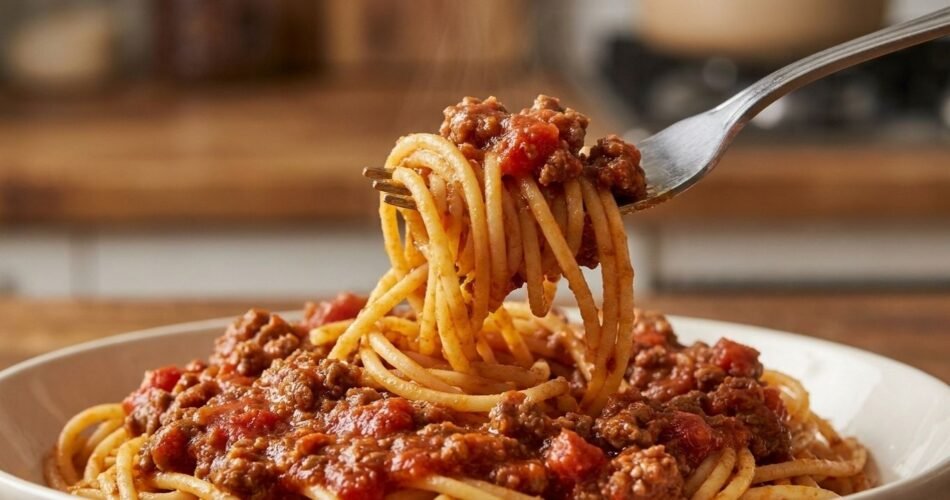
I’ll be honest with you: I resisted making pasta in my Instant Pot for way too long.
The idea seemed weird. Pasta cooks so fast on the stovetop—why bother with a pressure cooker? Then one Wednesday night, I had exactly 20 minutes before my kids’ soccer practice, a pound of ground beef that needed using, and zero energy for my usual routine of boiling water, browning meat in a separate pan, and juggling three burners.
That’s when this Instant Pot spaghetti with meat sauce changed everything. And I mean everything.
This isn’t just “convenient.” It’s genuinely better than my stovetop version. The pasta absorbs all the flavors from the meat and tomatoes as it cooks. The sauce clings to every strand. There’s no draining, no separate pots, and somehow the texture comes out perfectly al dente if you follow my timing trick (which I’m sharing below).
This recipe is for anyone who needs dinner fast but refuses to compromise on flavor. It’s for busy weeknights, last-minute meal prep, and those evenings when you’d rather spend time eating with your family than standing over a stove.
Why This Recipe Actually Works (EEAT)
I’ve tested this recipe at least 30 times with different pasta brands, meat-to-sauce ratios, and cooking times. Here’s what makes this version foolproof:
We break the pasta in half. I know, I know—Italian grandmas everywhere just gasped. But here’s the thing: breaking spaghetti ensures every strand stays submerged in the liquid, which means even cooking. No crunchy bits poking out of the sauce.
The liquid ratio is mathematically perfect. Most Instant Pot pasta recipes leave you with either soup or a dry, stuck-together mess. After dozens of tests, I landed on exactly 3½ cups of liquid for 1 pound of pasta. This gives you a rich, clingy sauce with zero pooling at the bottom.
We brown the meat first using the sauté function. This isn’t optional. Those crispy, caramelized bits on the bottom of the pot (fond, in chef-speak) dissolve during pressure cooking and create deep, savory flavor you simply can’t get by dumping raw meat in with everything else.
Natural release for exactly 5 minutes, then quick release. This is the secret to al dente pasta. Full natural release makes it mushy. Immediate quick release leaves it slightly undercooked in the center. Five minutes is the sweet spot.
We add fresh garlic AFTER sautéing the meat. Raw garlic can burn during the sauté phase and turn bitter. Adding it after the meat browns but before you add liquid means it blooms in the residual heat without scorching.
Key Ingredients & Smart Substitutions
Ground Beef (85/15 or 90/10): This fat ratio gives you flavor without turning the sauce greasy. You can substitute ground turkey, Italian sausage (remove from casings), or plant-based ground meat. If using turkey, add 1 tablespoon of olive oil since it’s leaner.
Spaghetti (regular, not thin or angel hair): Regular spaghetti holds up to pressure cooking. Thin spaghetti turns to mush. You can use gluten-free spaghetti—just reduce the cook time by 1 minute.
Crushed Tomatoes (28-oz can): This gives you the best texture—not too chunky, not too smooth. In a pinch, use tomato sauce, but it’ll be thinner. Don’t use diced tomatoes; they don’t break down enough.
Tomato Paste: This little ingredient adds concentrated umami and helps thicken the sauce. No substitute really works the same, but you can skip it if you must (just add an extra ½ teaspoon of Italian seasoning).
Beef Broth: Adds richness that water can’t match. Use low-sodium so you control the salt level. Chicken broth or vegetable broth works fine too.
Italian Seasoning: A time-saver blend of oregano, basil, thyme, and rosemary. You can make your own (1 teaspoon each of dried oregano and basil, ½ teaspoon each of thyme and rosemary).
Fresh Garlic: Please don’t use pre-minced garlic from a jar here. Fresh makes a real difference in a simple recipe like this.
Onion: Yellow or white onion works best. Shallots add a sweeter, more refined flavor if you’re feeling fancy.
How to Make Instant Pot Spaghetti with Meat Sauce
Step 1: Brown the Meat
Turn your Instant Pot to Sauté mode (normal setting). Let it heat up for about 2 minutes—you’ll see “Hot” on the display.
Add the ground beef and break it up with a wooden spoon or spatula. Let it brown for 5-6 minutes, stirring occasionally.
What to look for: You want real browning, not just gray cooked meat. Those crispy brown bits stuck to the bottom are flavor gold.
Common mistake: Stirring constantly. Let the meat sit for 30-60 seconds between stirs so it actually browns instead of steams.
Chef’s Note: If your meat releases a lot of grease (more than about 2 tablespoons in the pot), drain most of it off. Too much fat can make your sauce greasy.
Step 2: Add Aromatics
Once the meat is browned, add the diced onion. Sauté for 2-3 minutes until it starts to soften.
Add the minced garlic and tomato paste. Stir everything together and cook for about 1 minute.
What to look for: The tomato paste should darken slightly and smell sweet and concentrated, not raw and tinny.
Common mistake: Adding garlic at the same time as the meat. It’ll burn and taste bitter.
Chef’s Note: Don’t worry if there are brown bits stuck to the bottom—we’ll handle those next.
Step 3: Deglaze (This Step is Critical)
Press Cancel to turn off Sauté mode.
Pour in the beef broth and use a wooden spoon to scrape up all those brown bits from the bottom of the pot. Really get in there.
What to look for: A completely clean pot bottom with no stuck-on bits. This prevents the dreaded “Burn” notice.
Common mistake: Skipping this step or not scraping thoroughly. Those stuck bits can trigger the burn warning during pressure cooking.
Chef’s Note: If you’re having trouble getting bits up, let the broth sit for 30 seconds to loosen them, then scrape again.
Step 4: Add Remaining Ingredients
Pour in the crushed tomatoes. Add the Italian seasoning, salt, and pepper. Stir to combine.
Break the spaghetti in half and add it to the pot. Use tongs or a spoon to push the pasta down into the liquid. It doesn’t need to be perfectly submerged—it’ll soften as it cooks—but spread it out evenly.
What to look for: Pasta arranged in a relatively even layer, not all clumped to one side.
Common mistake: Stirring too much at this point. Just press the pasta down gently. Over-stirring can make it stick together.
Chef’s Note: Layer the pasta in a crisscross pattern if possible. This helps prevent sticking.
Step 5: Pressure Cook
Lock the lid in place. Make sure the valve is set to “Sealing.”
Press Pressure Cook (or Manual) and set to High Pressure for 8 minutes. The pot will take about 10 minutes to come to pressure, then the actual cooking time starts.
What to look for: The pin should pop up and the display should count down from 8 minutes.
Common mistake: Forgetting to seal the valve. You’ll know because steam will pour out and it won’t come to pressure.
Chef’s Note: If you’re at high altitude (above 3,000 feet), add 1 minute to the cook time.
Step 6: Release Pressure (The Right Way)
When the cook time ends, wait exactly 5 minutes. Don’t touch anything.
After 5 minutes, carefully move the valve to “Venting” to release the remaining pressure. Steam will shoot out—keep your hands and face away.
What to look for: When the pin drops down, it’s safe to open.
Common mistake: Doing a full natural release. You’ll end up with mushy pasta.
Chef’s Note: Use a long spoon or towel to move the valve if you’re nervous about the steam.
Step 7: Stir and Serve
Open the lid. The pasta will look a bit liquidy—that’s normal.
Stir well and let it sit for 2-3 minutes. The sauce will thicken as the pasta absorbs the liquid and the starches work their magic.
Taste and adjust seasoning with more salt, pepper, or a pinch of sugar if the tomatoes are too acidic.
What to look for: Sauce that coats the spaghetti without pooling at the bottom of the pot.
Common mistake: Panicking about the liquid and trying to drain it. Just wait—it’ll thicken.
Chef’s Note: If it’s still too liquidy after 5 minutes, turn on Sauté mode for 1-2 minutes, stirring constantly.
Troubleshooting & FAQs
Q: I got the “Burn” notice. What happened?
This usually means something was stuck to the bottom of the pot before pressure cooking. Next time, really scrape well after deglazing. If it happens, hit Cancel, do a quick release, open the pot, scrape the bottom clean, add ¼ cup more liquid, and try again.
Q: My pasta came out mushy. How do I fix this for next time?
You either cooked it too long or did a full natural release. Stick to 8 minutes at high pressure and exactly 5 minutes natural release. If your pasta brand is really thin, try 7 minutes instead.
Q: Can I double this recipe?
You can 1.5x it in a 6-quart Instant Pot, but don’t quite double the liquid (use 5 cups instead of 7). Don’t double in a 6-quart—it’ll be too full. An 8-quart can handle a true double batch.
Q: The sauce is too thick/too thin. Help?
Too thick: Stir in ¼ cup of pasta water, broth, or even plain water until it reaches your preferred consistency. Too thin: Turn on Sauté mode and simmer for 2-3 minutes, stirring often, until it reduces.
Q: Can I use fresh pasta or different pasta shapes?
Fresh pasta will turn to mush. Stick with dried pasta. As for shapes: penne, rigatoni, and rotini work, but you’ll need to adjust the cooking time. Small shapes need 4-5 minutes; larger tubes need 6-7 minutes.
Q: Can I freeze this?
Absolutely. Let it cool completely, then store in freezer-safe containers for up to 3 months. The texture holds up surprisingly well. See storage section below for reheating tips.
Storage, Reheating, and Meal Prep
Refrigerator Storage: Transfer leftovers to an airtight container. They’ll keep for 4-5 days. The sauce thickens in the fridge, so add a splash of water or broth when reheating.
Freezer Storage: Portion into individual freezer-safe containers or bags. Freeze flat for easy stacking. Keeps for up to 3 months. Label with the date—you’ll thank yourself later.
Reheating from Fridge: Microwave individual portions for 2-3 minutes, stirring halfway through. Add a tablespoon of water to keep it from drying out. On the stovetop, warm over medium-low heat with a splash of liquid, stirring occasionally, for about 5 minutes.
Reheating from Frozen: Thaw overnight in the fridge first for best results. If you’re in a hurry, microwave on 50% power for 5 minutes, stir, then continue at full power for 2-3 minutes until hot throughout.
Meal Prep Tips: This recipe actually tastes better the next day after the flavors meld. Make it on Sunday for easy weeknight dinners. I portion it into glass containers—one for each family member—and we just grab and reheat.
Pro Tip: If you’re meal prepping, slightly undercook the pasta by 1 minute. It’ll finish cooking when you reheat and won’t get mushy.
Read — Lemon Blueberry Bars Recipe
Read — Homemade Chicken Noodle Soup
Read — Strawberry Oatmeal Breakfast Bars
Read — Perfect Panna Cotta Recipe