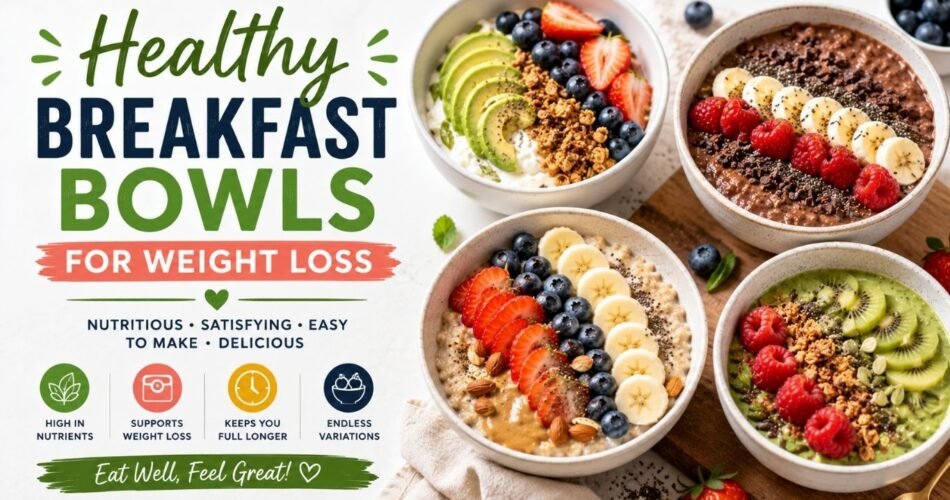
There’s a version of the morning where you wake up with time to spare, brew your coffee slowly, and prepare something nourishing before the day swallows you whole. Then there’s reality — alarms snoozed twice, a rushed shower, and a granola bar grabbed on the way out the door.
I’ve lived both versions. And I can tell you that what you eat in the morning genuinely shapes how the rest of your day unfolds. Not in a dramatic, wellness-influencer kind of way, but in a deeply practical sense. When breakfast actually satisfies you — real hunger satisfaction, not just “full for 40 minutes” — you make better choices later. You’re less likely to crash at 10:30 AM or overeat at lunch.
That’s where breakfast bowls come in. They’re flexible, genuinely quick once you know what you’re doing, and when built correctly, they’re one of the most effective tools for supporting weight loss without feeling like you’re constantly restricting yourself.
Let’s talk about how to actually build them well.
Why Breakfast Bowls Work for Weight Loss
The concept isn’t complicated, but the science behind it is solid. A well-constructed breakfast bowl combines protein, fiber, and healthy fats in a single meal. That combination does something important — it slows digestion, stabilizes blood sugar, and keeps hunger hormones (particularly ghrelin) from spiking too fast.
When blood sugar stays steady after breakfast, you’re not fighting cravings by mid-morning. You’re not hunting for something sweet at 10 AM. That controlled appetite effect is one of the most practical contributors to gradual, sustainable weight loss.
Compare that to a typical rushed breakfast — sugary yogurt, a pastry, juice — and you can see why most people struggle. Those meals spike blood sugar fast and drop it just as fast, leaving you hungry, foggy, and reaching for whatever’s nearby.
A bowl forces you to think in components, which naturally leads to more balanced choices. And when you’re filling a bowl, you can actually see what you’re eating, which makes portion awareness much more intuitive than eating straight from a bag or box.
The Building Blocks: What Goes Into a Great Breakfast Bowl
You don’t need a strict formula, but having a mental framework helps. Think of it in layers:
1. Your Base (Fiber + Complex Carbs)
This is where you get sustained energy. Options include rolled oats, quinoa, brown rice (yes, really — savory bowls are underrated), or cauliflower rice if you’re keeping carbs lower. Steel-cut oats are my personal favorite for staying power, though they need either overnight prep or a longer cook time.
2. Your Protein Source
This is non-negotiable for weight loss. Without adequate protein, a breakfast bowl is just a fancy fruit salad. Greek yogurt (plain, full-fat or 2%), cottage cheese, eggs, tofu scramble, protein powder blended into oats, or even smoked salmon — all work beautifully depending on the bowl direction you’re going.
3. Healthy Fats
Small amounts, but important. Nut butters, avocado, chia seeds, hemp seeds, flaxseed, or a small handful of walnuts or almonds round out satiety significantly. Don’t skip this layer because you’re worried about calories — fat is not the enemy when you’re eating appropriate amounts.
4. Produce (Fruit or Vegetables)
For sweet bowls, think berries, banana slices, mango, or peaches. For savory bowls — spinach, roasted sweet potato, cherry tomatoes, sautéed zucchini. Fresh or frozen both work. Frozen fruit is often more nutritious than fresh that’s been sitting in your fridge for a week, and it’s significantly cheaper.
5. Toppings and Texture
Granola (watch the sugar content), seeds, coconut flakes, a drizzle of honey or maple syrup, fresh herbs for savory bowls. This layer makes the bowl feel like something you actually want to eat, not just something you’re tolerating for health reasons.
Common Mistakes That Undermine Weight Loss Goals
Before diving into specific bowls, it’s worth addressing a few things that quietly sabotage otherwise healthy intentions:
Too much sugar hidden in “healthy” toppings. Store-bought granola can have 12–18 grams of sugar per serving. Flavored yogurts are even worse — some have as much sugar as a candy bar. If you’re starting your morning with 40+ grams of sugar, no amount of chia seeds is going to offset that metabolic roller coaster.
Not enough protein. A fruit bowl with almond milk and a sprinkle of seeds might look beautiful on Instagram, but it won’t keep you full past 8:30 AM. Aim for at least 20–30 grams of protein at breakfast if weight loss is your goal.
Portions that drift. Bowls can get generously large in a way that plate-based eating doesn’t always encourage. A tablespoon of nut butter is about 100 calories. Three tablespoons, which is easy to pour without thinking, is 300. It adds up. I’m not saying count every calorie obsessively, but being mindful of calorie-dense toppings matters.
Skipping breakfast entirely to “save calories.” For some people, intermittent fasting works well, but skipping breakfast and then overeating later isn’t a strategy — it’s a setup. If you’re genuinely hungry in the morning, eating a solid breakfast bowl is almost always the better call.
Four Breakfast Bowls Worth Making
1. The Classic Protein Oat Bowl
This one is genuinely my most-made breakfast. Cook old-fashioned rolled oats in water or unsweetened almond milk. While they’re still warm, stir in a half-scoop of vanilla protein powder (it melts in beautifully), a tablespoon of almond butter, and a sprinkle of cinnamon. Top with a small handful of fresh blueberries, a few sliced strawberries, and a teaspoon of chia seeds.
The result is creamy, slightly sweet without added sugar, and it holds hunger for 3–4 hours reliably. Protein content hovers around 22–26 grams depending on the powder you use.
If you love oat-based breakfasts but prefer to prep the night before, my healthy overnight oats recipes for busy days article has a handful of no-cook versions that work just as well and require zero morning effort.
2. Savory Egg and Veggie Bowl
Sweet breakfasts get all the attention, but savory bowls are where it’s at for people who don’t have a strong sweet tooth in the morning — or who find that sweet breakfasts lead to more sugar cravings later.
Start with a base of cooked quinoa or cauliflower rice. Top with two scrambled or fried eggs, a handful of baby spinach (the residual heat wilts it nicely), diced cherry tomatoes, and half an avocado sliced thin. A pinch of red pepper flakes, a squeeze of lemon, and maybe a tablespoon of hummus on the side. That’s it.
It’s fast, it’s filling, and it eats more like a satisfying lunch than a typical breakfast, which some people actually need to feel grounded in the morning.
3. Greek Yogurt Berry Bowl with Crunch
This one takes about three minutes and is probably the most beginner-friendly option. Use plain Greek yogurt as the base — full-fat has more staying power than fat-free, counterintuitively. Layer on a mix of frozen (thawed) or fresh berries, a tablespoon of natural almond butter or tahini drizzled on top, a small sprinkle of low-sugar granola for crunch, and a teaspoon of hemp seeds.
The key detail that makes this different from the sugar-loaded parfait versions: no flavored yogurt, no sweetened granola. It’s naturally sweet from the berries without the blood sugar crash.
This works well for dairy-free folks too — swap Greek yogurt for a thick coconut yogurt or an unsweetened soy-based yogurt. The texture is slightly different but the concept holds.
4. Tropical Smoothie Bowl (Low-Sugar Version)
Smoothie bowls have a reputation for being secretly terrible for weight loss — and honestly, a lot of them are. Mango, banana, juice base, honey drizzle, and a pile of granola? That can easily hit 600–700 calories and 60 grams of sugar.
But a well-built smoothie bowl is a different thing entirely. Blend frozen cauliflower (you won’t taste it), half a frozen banana, a scoop of vanilla protein powder, unsweetened coconut milk, and a handful of frozen mango until thick — it should be almost spoonable, not pourable. Top with sliced kiwi, a few coconut flakes, pumpkin seeds, and a small drizzle of honey.
The hidden cauliflower adds bulk and creaminess without the carbs and calories of extra fruit. It sounds weird. It works.
If you enjoy blended breakfast options, you’ll find a lot of practical ideas in these healthy smoothie recipes for weight loss that use a similar balanced approach.
Meal Prep and Time-Saving Strategies
The biggest reason people don’t eat well in the morning is time. So here’s how to make breakfast bowls realistic for actual weekday mornings:
Batch-cook your base on Sundays. A big pot of steel-cut oats or quinoa takes 20 minutes and lasts 5 days in the fridge. Portion it out and you’re reheating, not cooking, every morning.
Pre-portion your toppings. Measure out seeds, nuts, and granola into small containers or even just zip-lock bags for the week. It removes the “I’ll just eyeball it” problem.
Freeze your smoothie bowl bases in individual bags. Blend the night before, freeze in single portions, then blend again briefly in the morning. Or just prep fresh — it takes four minutes.
Keep your freezer stocked with frozen fruit and vegetables. Fresh berries go bad fast and are expensive year-round. Frozen is your best friend for practical, consistent healthy eating.
For more ideas that fit real-world busy mornings, I’ve covered a range of options in this quick breakfast ideas for busy mornings guide — including some that take under five minutes.
Ingredient Swaps for Different Dietary Needs
- Dairy-free: Coconut yogurt, oat milk, almond milk, hemp protein powder
- Low-carb/keto: Cauliflower rice base, egg-based bowls, full-fat yogurt (small portions), focus on nuts, seeds, and avocado
- High-protein: Cottage cheese base (surprisingly good with berries and cinnamon), double egg bowls, protein powder stirred into oats
- Vegan: Tofu scramble for savory bowls, plant-based protein powder, chia-based pudding as a base
A Final Thought
There’s no single perfect breakfast that works for everyone. But the bowl format is genuinely one of the most flexible, scalable approaches to eating well in the morning — especially when the goal is weight loss without misery.
Start simple. Pick a base, add protein, add a fat, add color. Make it something you’ll actually look forward to eating. That last part matters more than any nutrient ratio — because the healthiest breakfast is the one you consistently eat.