There’s a version of weeknight cooking that looks great on paper — meal prepped containers, perfectly portioned macros, everything labeled and stacked. And then there’s the reality most of us are actually living: it’s 6:45 PM, you’re tired, you skipped lunch, and the thought of standing over a stove for an hour feels genuinely impossible.
I’ve been cooking for myself and my family for over a decade, and the meals that have stayed in our regular rotation aren’t the elaborate ones. They’re the ones that hit hard nutritionally, take less than half an hour, and taste like you actually tried. High-protein eating doesn’t require fancy equipment or a culinary degree. It requires knowing which ingredients do the heavy lifting and having a handful of reliable techniques up your sleeve.
This is that guide.
Why Protein Actually Matters (Beyond the Gym Crowd)
Before we get into the food, a quick word on why protein deserves more credit than it gets. Most people associate high-protein eating with bodybuilders or people actively trying to bulk up. But protein is genuinely one of the most satiating macronutrients for anyone — it slows digestion, keeps blood sugar more stable, and helps you feel satisfied for longer after eating.
If you’ve ever had a lunch that left you raiding the pantry two hours later, it was probably low in protein. A meal with 30-40 grams of protein? You’ll feel the difference.
The good news is that building a high-protein meal doesn’t mean eating a plain chicken breast and calling it done. Let me walk you through what actually works on a weeknight.
The Protein Sources Worth Keeping Stocked
Speed starts at the grocery store. If your fridge and pantry have the right building blocks, a 25-minute high-protein dinner stops feeling like a scramble and starts feeling automatic.
Eggs are the most underrated fast protein there is. A whole egg has about 6 grams of protein, costs almost nothing, and cooks in minutes. More on this shortly.
Canned tuna and salmon are genuinely underappreciated. A single can of chunk light tuna has around 20-25 grams of protein. No cooking required. If you haven’t used canned salmon yet, give it a chance — it works beautifully in patties, salads, or stirred into pasta with a bit of lemon and olive oil.
Greek yogurt (the full-fat, plain kind) is one of those rare ingredients that works in both savory and sweet contexts. Use it as a sauce base, a marinade for chicken, or straight from the container with some berries and seeds if you need something fast.
Cottage cheese is having a moment right now, and for good reason. Half a cup has nearly 14 grams of protein. Blend it smooth and it disappears into sauces, dips, and even scrambled eggs without anyone noticing.
Rotisserie chicken deserves its own paragraph. This is the ultimate weeknight shortcut. Most grocery stores sell them for around $8-10, and one bird can yield enough meat for two or three meals. Pull it apart while it’s still warm, and you’ve already got the hardest part of dinner done. I keep a rotisserie chicken in my fridge almost every week during busy stretches.
Frozen shrimp thaws fast and cooks in under four minutes. Edamame can go from frozen to plate in five. Canned chickpeas and lentils need zero cooking time and bring both protein and fiber to the table. These aren’t backup options — they’re legitimate weeknight staples.
Meals That Come Together Fast (And Actually Taste Good)
The Sheet Pan That Runs Itself
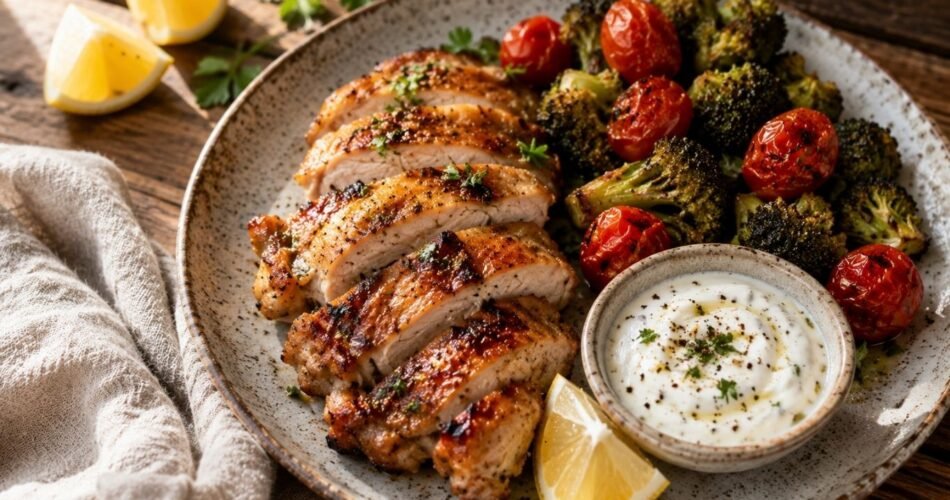
Preheat your oven to 425°F. On a large baking sheet, toss two chicken thighs or salmon fillets with olive oil, garlic powder, smoked paprika, salt, and whatever vegetable you have — broccoli, bell peppers, zucchini, even frozen green beans work. Spread everything out, roast for 20-22 minutes, and dinner is done.
What makes this faster than it sounds: the prep takes maybe five minutes, and the oven does everything else. While it roasts, you can make a quick sauce — stir together Greek yogurt, lemon juice, a clove of minced garlic, and a pinch of salt. That sauce adds another five or six grams of protein per serving and makes the whole plate feel restaurant-worthy without extra effort.
Salmon works especially well here because it cooks faster than chicken and needs almost no seasoning to taste good. Season it simply, roast it at high heat, and don’t touch it until it’s done. Resist the urge to flip it every two minutes.
Egg Fried Rice, Done Right
This is the meal I make when the fridge looks sparse and I need something real. Heat a large skillet or wok until it’s properly hot — not medium, not medium-high, actually hot. Add a neutral oil, then whatever vegetables you have (frozen peas, carrots, diced onion, leftover roasted vegetables). Cook those for two or three minutes, push them to the side, add a touch more oil, and scramble three or four eggs directly in the pan. Break them up before they fully set, then mix everything together with day-old rice, a splash of soy sauce, a few drops of sesame oil, and some white pepper.
Four eggs in this dish brings roughly 24 grams of protein. Add a can of drained chickpeas or some shredded rotisserie chicken and you’re looking at 40+ grams in one bowl, total cooking time around 15 minutes.
The mistake most people make with fried rice is using fresh rice. Fresh rice is too moist and clumps. Day-old rice that’s been sitting in the fridge is drier, separates better in the pan, and gets those slightly crispy edges that make the dish actually satisfying. If you forget to make rice ahead, spread freshly cooked rice on a baking sheet and let it cool in the freezer for 15-20 minutes. Not perfect, but close enough.
Tuna and White Bean Salad (No Cooking Required)
Two cans of drained tuna, one can of drained white beans, a handful of cherry tomatoes halved, some red onion thinly sliced, a few capers if you have them, a generous squeeze of lemon, olive oil, salt, pepper, and whatever fresh herb is sitting in your fridge. That’s it. Ready in seven minutes. Protein content is somewhere in the neighborhood of 45-50 grams for the whole batch.
This one requires zero heat, which makes it perfect for summer evenings or days when you genuinely don’t want to turn on the stove. It also keeps well in the fridge for a couple of days, though the tomatoes soften slightly overnight. Still good — just different in texture.
If you want something creamier, serve it on top of a big scoop of cottage cheese instead of as a straight salad. Sounds odd, but the mild flavor of cottage cheese works surprisingly well here.
Quick Skillet Chicken with Chickpeas
Season two chicken breasts (pounded thin so they cook evenly) with cumin, coriander, garlic powder, salt, and a pinch of cayenne. Sear in a hot, oiled skillet — about four minutes per side. Remove the chicken, add a can of drained chickpeas directly to the same pan with a bit more oil, a spoonful of tomato paste, and a splash of chicken broth. Let that cook down for three or four minutes while you slice the chicken. Serve the chickpeas underneath with the chicken on top, a squeeze of lemon, and some fresh parsley if you have it.
This is a proper dinner — protein from two sources, good fat, some carb from the chickpeas. Weeknight cooking doesn’t always need to be a full production.
Mistakes People Make (And How to Avoid Them)
Cooking proteins on heat that’s too low is probably the most common error. Chicken that goes into a lukewarm pan steams instead of sears. You lose the crust, the flavor, and often end up with something rubbery and pale. Get the pan genuinely hot before the protein touches it.
Overcooking is the other one. Shrimp goes from perfect to rubber in about 90 seconds. Salmon continues cooking after it leaves the pan. Pull things off heat slightly before they look completely done — carryover heat will finish the job.
Seasoning only at the end is a mistake that doesn’t get talked about enough. Season in layers as you go — not everything at the beginning or everything at the end, but building flavor at each stage. A pinch of salt when the onions go in, another when the protein hits the pan, a final taste and adjustment at the end.
And don’t skip acid. A squeeze of lemon or a splash of vinegar at the end of cooking brightens everything and makes simple proteins taste like they took much longer to make.
Ingredient Swaps Worth Knowing
If chicken is expensive or you just don’t have it, canned salmon or tuna works in most recipes that call for shredded chicken. Eggs can step in for nearly any protein source in a pinch — they’re fast, cheap, and versatile enough to carry a whole meal.
For plant-based swaps, tempeh is one of the better options because it’s dense, holds up to high heat, and has a satisfying texture that tofu sometimes lacks. Lentils from a can need literally no prep time and add about 18 grams of protein per cup.
If Greek yogurt isn’t available, full-fat sour cream works in savory applications. For smoothies or sweet dishes, silken tofu blended smooth is a surprisingly effective stand-in with solid protein content. Speaking of which, if you’re looking for ways to hit your protein goals earlier in the day without cooking, some well-constructed healthy smoothie recipes for weight loss can add 20-30 grams of protein depending on the ingredients you use — great for mornings when even a 15-minute meal feels like too much.
Keeping Things Interesting Without Adding Time
Eating high-protein meals consistently is much easier when the food doesn’t feel repetitive. A few simple strategies help:
Rotate your sauces. The same grilled chicken over greens tastes completely different with a garlicky yogurt sauce versus a sesame-ginger vinaigrette versus a quick chimichurri. Make a fresh sauce two or three times a week instead of reaching for the same bottle.
Change the grain. The same protein over rice, over quinoa, stuffed into a pita, or on top of dressed greens are genuinely four different meals even if the protein is identical. Quinoa, by the way, is one of the only grains that’s a complete protein on its own — worth keeping on hand.
Use fresh herbs freely. A handful of cilantro, some torn basil, or chopped flat-leaf parsley over a finished dish costs almost nothing and completely transforms the eating experience. This is the single most underused tool in home cooking.
And when you want something that sits alongside a high-protein main without requiring extra work, a quick, substantial salad can round out the meal nicely. Something like a creamy cucumber salad with bacon and cheddar — it’s simple, it adds complementary flavors, and it takes almost no time to throw together.
Storing What You Make
Most high-protein meals store better than people expect. Cooked chicken keeps for four days refrigerated. Egg fried rice is actually better the next day. The tuna and white bean salad holds well for two days. If you make a double batch of the skillet chicken and chickpeas, you’ve essentially handled two lunches without any extra work.
The only proteins that don’t hold up especially well are shrimp (gets rubbery when reheated) and eggs cooked to a soft consistency. Both are better eaten fresh, which isn’t a problem since they cook so quickly anyway.
A Closing Thought
Fast, high-protein cooking isn’t about having a perfect pantry or following a specific plan. It’s about getting comfortable with a handful of reliable techniques and trusting that simple, well-made food is always better than complicated food made under stress. A well-seasoned piece of fish over some garlicky greens beats an elaborate recipe you’re stressed about every time.
The more you cook this way, the more automatic it becomes. You stop needing recipes for everything. You start eyeballing portions and adjusting seasonings instinctively. That’s the real goal — not a rigid meal plan, but a kind of cooking confidence that makes good nutrition feel genuinely sustainable. Start with one or two of the meals here, make them a few times until they feel easy, and build from there.