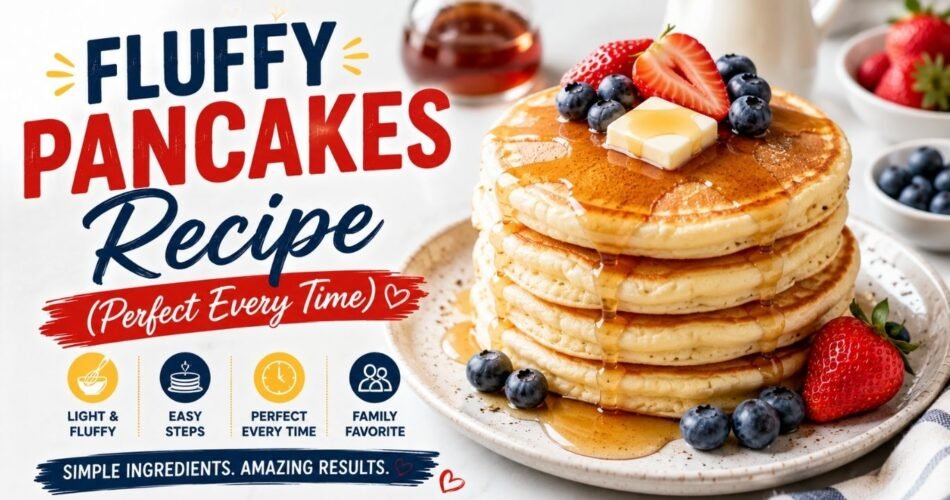
There’s a particular kind of happiness that only a stack of warm, fluffy pancakes on a Sunday morning can deliver. You know the feeling — coffee is brewing, the kitchen smells like vanilla and butter, and that first golden pancake slides off the pan looking exactly like the ones you dream about. Light, soft, tall enough to hold a generous pool of maple syrup.
I’ve been making pancakes since I was about ten years old, standing on a step stool next to my grandmother while she poured batter in perfect circles. For years, though, mine never quite matched hers. They’d come out flat, slightly rubbery, or just lacking that pillowy softness that makes a pancake worth eating. I tried endless recipes, watched tutorials, and honestly over-complicated it for longer than I’d like to admit.
What I eventually figured out — and what this recipe is built around — is that making truly fluffy pancakes is less about finding a magic formula and more about understanding why things work the way they do. Once you get that, you’ll make great pancakes every single time without even thinking about it.
What Actually Makes Pancakes Fluffy?
Before we get into the recipe, let’s talk about the science for a minute, because it’s genuinely useful.
Baking powder is the hero here. When it hits moisture and heat, it releases carbon dioxide bubbles that make the batter rise and stay light. Most fluffy pancake recipes call for a full tablespoon per cup of flour, which sounds like a lot — but it’s not. Don’t cut it back or you’ll end up with flat, sad pancakes.
Eggs do double duty. The yolk adds richness and a little fat that keeps the pancake tender, while the whites provide structure. Some people separate their eggs and whip the whites before folding them in for extra lift. Honestly? It works. But it’s also extra dishes, and I’ve found that fresh baking powder and the right technique gets you 90% of the way there without the drama.
Milk (or any milk alternative) loosens the batter and activates the baking powder. Buttermilk is the gold standard because it’s slightly acidic, which reacts with the baking powder to create even more lift. But regular whole milk works beautifully. Even oat milk or almond milk will do the job if that’s what you’ve got.
Resting the batter is the step most people skip. Letting it sit for 5 minutes before cooking allows the gluten to relax and the baking powder to start working. You’ll actually see a few bubbles form on the surface. That’s a good sign.
Ingredients
(Makes about 8–10 medium pancakes)
- 1 ½ cups all-purpose flour — spooned and leveled, not packed. Too much flour = dense pancakes.
- 1 tablespoon baking powder — fresh baking powder matters here. Test yours by dropping a teaspoon in hot water. If it bubbles vigorously, it’s good.
- 1 tablespoon granulated sugar — just enough to add a hint of sweetness and help with browning.
- ½ teaspoon salt — don’t skip this; it balances everything.
- 1 cup + 2 tablespoons milk — whole milk preferred, but any milk works including oat or almond.
- 1 large egg — room temperature if possible.
- 2 tablespoons unsalted butter, melted — or neutral oil like avocado or light olive oil.
- 1 teaspoon pure vanilla extract — optional, but adds a warmth that’s hard to describe and easy to love.
Step-by-Step Instructions
Step 1: Mix your dry ingredients
In a large bowl, whisk together the flour, baking powder, sugar, and salt. Get them properly combined so the baking powder is evenly distributed — this matters for even rise across the whole pancake, not just the center.
Step 2: Mix your wet ingredients separately
In a smaller bowl or measuring cup, whisk together the milk, egg, melted butter, and vanilla extract. Make sure your butter isn’t scalding hot when it goes in or you’ll scramble the egg. Just slightly warm is perfect.
Step 3: Combine — and stop early
Pour the wet ingredients into the dry. Now here’s the most important instruction in this whole post: mix until just combined. You want to see the dry flour disappear, but lumps are totally fine. In fact, lumps are good. The moment you don’t see dry flour anymore, put the spoon down. Overmixing develops gluten, and gluten = tough, chewy, flat pancakes. It’s the number one reason homemade pancakes disappoint people.
Step 4: Rest the batter
Leave it alone for 5 minutes. Walk away, pour your coffee, do nothing. This pause genuinely improves the texture.
Step 5: Heat your pan properly
Set a nonstick skillet or griddle over medium heat. Let it preheat for at least 2 minutes before you pour any batter. To test readiness, flick a few drops of water on the surface — they should dance and evaporate in about 2 seconds. Add a small pat of butter or a light spray of cooking oil and let it melt.
Step 6: Pour and cook
Use a ¼ cup measuring cup to pour your batter. Don’t spread it — just pour and let it settle naturally. Cook until bubbles form on the surface and the edges look set and slightly matte, about 2 to 3 minutes. Then flip once and cook for another 1 to 2 minutes. Resist the urge to press down on the pancake with your spatula. You’ll deflate it. Just let it do its thing.
Step 7: Keep them warm
Place finished pancakes on a baking sheet in a 200°F (90°C) oven while you finish cooking the rest. They’ll stay warm without getting soggy or continuing to cook.
Common Mistakes and How to Fix Them
Flat pancakes? Usually old baking powder or overmixed batter. Try a fresh can and stop stirring sooner.
Dense and heavy texture? The pan may not have been hot enough, or you used too much flour. Measure by spooning flour into the cup, not scooping directly.
Uneven browning? Your heat is too high. Medium heat is the sweet spot. High heat browns the outside before the inside cooks through.
Batter spreading too thin? It’s too loose. Add a tablespoon more flour and let it rest again before cooking.
Sticking to the pan? Either the pan wasn’t preheated long enough, or it needs more butter. A properly preheated nonstick pan needs very little fat.
Ingredient Swaps and Variations
Dairy-free: Swap the milk for oat milk (my personal favorite here), almond milk, or soy milk 1:1. Replace butter with coconut oil or vegan butter. The pancakes will still be fluffy and delicious.
Buttermilk pancakes: Replace the milk with buttermilk and reduce baking powder to 2 teaspoons, adding ½ teaspoon baking soda. The tang is incredible.
Whole wheat flour: You can substitute up to half the flour with whole wheat without much texture difference. Going 100% whole wheat works, but they’ll be denser and slightly nutty — still tasty, just different.
Sugar alternatives: Maple syrup (2 teaspoons), honey, or coconut sugar all work in place of granulated sugar.
Banana pancakes: Mash one very ripe banana and whisk it into the wet ingredients. Reduce milk by 2 tablespoons. These are naturally sweeter and incredibly tender — one of my favorite weekend variations.
Protein pancakes: Add 2 tablespoons of vanilla protein powder and reduce flour by the same amount. The texture changes slightly but the flavor is great, especially with berries on top. If you’re into building a high-protein morning, check out these high-protein breakfast ideas for energy for more inspiration beyond just pancakes.
Blueberry pancakes: Fold ½ cup fresh or frozen blueberries into the batter after mixing. Don’t stir too much — just a gentle fold.
Cinnamon spice: Add ½ teaspoon cinnamon and a pinch of nutmeg to the dry ingredients. Perfect in fall.
Serving Ideas
The classic maple syrup and butter situation is a classic for good reason. But pancakes are genuinely a blank canvas:
- Fresh strawberries and whipped cream
- Sliced bananas with honey and a sprinkle of cinnamon
- Greek yogurt and mixed berries (adds protein, feels a bit lighter)
- Peanut butter drizzled with a little honey and banana slices
- A fried egg on the side to make it a full breakfast plate
If you’re putting together a more intentional breakfast and want something that feels balanced and nourishing alongside your pancakes, these healthy breakfast bowls for weight loss pair beautifully with a smaller stack for a complete morning spread.
Storage and Reheating
Pancakes reheat surprisingly well. Let them cool completely before stacking (or they’ll steam and get soggy), then store in an airtight container in the refrigerator for up to 4 days or in the freezer for up to 2 months. Freeze them flat on a baking sheet first, then transfer to a zip-lock bag so they don’t stick together.
To reheat: pop them in the toaster for 1–2 minutes for crispy edges and a warm center. Or microwave for 30–45 seconds covered with a damp paper towel to keep them soft. The toaster method honestly produces a better result — slightly crisp outside, fluffy inside.
A Few Final Thoughts
The honest truth about fluffy pancakes is that the recipe itself is simple. What makes the difference is patience — resting the batter, preheating the pan, not overmixing, flipping only once. These small habits are what separate an average stack from one that makes people ask for the recipe.
Make this once on a slow morning with no distractions, and you’ll understand exactly what to feel for. After that, it becomes second nature. The batter will look right, the bubbles will tell you when to flip, and you’ll just know.
That’s the real secret. Make it enough times, and perfect pancakes stop being a recipe you follow and start being something you simply know how to do.
Happy flipping. 🥞