Lunch Ideas You know that feeling around 2 PM when your eyelids start getting heavy, your focus drifts, and you’d give anything for a nap? I used to think that was just a normal part of the workday until I realized my lunch was setting me up for failure. A sad desk salad or a carb-heavy sandwich might fill you up temporarily, but they’re terrible at sustaining energy through the afternoon grind.
The difference maker? Protein. Real, substantial protein paired with fiber and healthy fats transforms lunch from a temporary fuel-up to a sustained energy source. I’m not talking about eating plain grilled chicken every single day (though we’ll get to how to make that actually delicious). I’m talking about building lunches that you genuinely look forward to, that keep you satisfied for hours, and that don’t require a culinary degree to pull off on a Tuesday night.
Why Protein Actually Changes Your Energy Game
Here’s what happens when you eat a high-protein lunch: your body breaks down protein more slowly than simple carbohydrates, which means your blood sugar doesn’t spike and crash. You get steady glucose release, which translates to steady energy. Protein also helps you feel fuller longer because it triggers satiety hormones and takes more effort to digest.
I noticed the difference within days of switching up my lunch routine. That 3 PM vending machine run? Didn’t need it anymore. The brain fog that made afternoon meetings feel like swimming through molasses? Gone. My energy stayed consistent, my focus sharpened, and honestly, I stopped spending money on overpriced coffee shop runs just to stay awake.
Aim for about 25-35 grams of protein at lunch—enough to make a real difference without overdoing it. Pair that with complex carbs and healthy fats, and you’ve got a metabolic sweet spot.
Building Blocks of an Energy-Sustaining Lunch
The best high-protein lunches aren’t just about throwing chicken breast in a container. They balance three key components:
Protein (obviously): This is your foundation. Lean meats, fish, eggs, Greek yogurt, cottage cheese, tofu, tempeh, legumes, or even high-protein grains like quinoa.
Fiber: Vegetables, whole grains, beans, and fruits slow down digestion and keep blood sugar stable. This is the component most people skimp on, and it’s why they’re hungry again in an hour.
Healthy fats: Avocado, nuts, seeds, olive oil, or tahini add satisfaction and help your body absorb vitamins. They also signal to your brain that you’ve eaten a complete meal.
When these three work together, you get what I call the “energy trifecta”—sustained fuel, stable mood, and genuine satisfaction.
Mediterranean Grain Bowl with Herbed Chicken
This is my go-to when I want something that feels restaurant-quality but takes maybe 30 minutes to prep for the week. The flavor combinations never get boring because every bite is a little different.
Start with grilled chicken thighs (yes, thighs—they stay moist when reheated, unlike breasts that turn into cardboard). Marinate them for even 20 minutes in lemon juice, garlic, oregano, and olive oil before cooking. One pound of chicken thighs gives you about 3-4 lunch servings.
Build your bowl with quinoa or farro as the base—both pack more protein than regular rice. Add cherry tomatoes, cucumber, red onion, Kalamata olives, and a handful of fresh spinach. Crumble some feta on top (the real stuff, not the pre-crumbled kind that tastes like salty rubber).
The game-changer is the tahini-lemon dressing. Whisk together tahini, lemon juice, a little water to thin it out, minced garlic, and salt. It’s creamy, tangy, and adds healthy fats that make the whole bowl incredibly satisfying.
Protein count: About 32 grams per serving
Make-ahead tip: Prep everything separately. Keep the dressing in a small container and add it right before eating so nothing gets soggy. The chicken stays good for 4 days; the chopped veggies last about 3.
Spicy Tuna and White Bean Mash on Whole Grain Toast
This one comes together in literally five minutes but feels substantial enough to power you through a packed afternoon. It’s also a budget-friendly option that doesn’t taste budget-friendly.
Drain a can of white beans (cannellini or great northern) and roughly mash them with a fork—you want some texture, not baby food. Mix in a can of tuna (I prefer the olive oil-packed kind), a squeeze of lemon, red pepper flakes, chopped parsley, and a drizzle of good olive oil.
Pile this onto thick slices of whole grain or sourdough bread that you’ve toasted. Add arugula or spinach, sliced tomatoes, and maybe some thinly sliced red onion if you’re not heading into close-quarters meetings.
Protein count: About 28 grams
Variation: Swap tuna for canned salmon or even sardines if you’re feeling adventurous. Use chickpeas instead of white beans for a slightly earthier flavor. Make it a lettuce wrap situation if you’re going low-carb.
Sheet Pan Steak and Roasted Vegetables
When I want lunch to feel a little special—or when I’ve got slightly more time on a Sunday—I make this. It’s one of those meals that requires minimal active cooking time but delivers maximum satisfaction.
Season a flank steak or sirloin with salt, pepper, and smoked paprika. Let it sit at room temperature while you chop vegetables: bell peppers, red onion, broccoli, and sweet potato cubes. Toss the veggies with olive oil and your favorite seasonings (I use garlic powder, cumin, and a little chili powder).
Roast the vegetables at 425°F for about 15 minutes, then push them to the sides of the sheet pan and add your steak in the center. Cook for another 10-15 minutes depending on how thick your steak is and how you like it done. Let the meat rest for 5 minutes before slicing.
Divide everything into containers with a scoop of brown rice or a baked sweet potato on the side if you need more carbs.
Protein count: 30-35 grams depending on portion size
Budget swap: Use chicken drumsticks instead of steak. They’re ridiculously cheap and get crispy and delicious when roasted. Or try eggs—scrambled eggs with roasted vegetables is an underrated lunch that costs almost nothing.
Turkey and Hummus Collard Wraps
On days when I want something lighter but still filling, these wraps hit the spot. They’re crunchy, fresh, and packed with protein without feeling heavy.
Use large collard green leaves as your wrap (remove the thick center stem). Spread a generous layer of hummus down the center—this adds protein, fiber, and healthy fats all at once. Layer with sliced turkey breast, shredded carrots, cucumber sticks, red cabbage, and avocado.
Roll it up tightly like a burrito, tucking in the sides as you go. Slice it in half on an angle because somehow that makes it taste better.
Protein count: About 25 grams
Plant-based version: Skip the turkey and double the hummus, then add tempeh bacon or seasoned chickpeas for crunch and extra protein.
For more inspiration on quick assembly lunches like this, check out these quick and easy lunch recipes that come together in minutes.
Creamy Tuscan Chicken Pasta
Yes, pasta can absolutely be part of a high-protein lunch. The trick is choosing the right pasta and not drowning it in cream sauce with no protein payoff.
Use chickpea pasta or lentil pasta—these varieties pack 15-20 grams of protein per serving compared to regular pasta’s 7-8 grams. Cook your pasta according to package directions.
For the sauce, sauté diced chicken breast with garlic, then add sun-dried tomatoes, spinach, and a splash of chicken broth. Stir in just a couple tablespoons of cream cheese or a dollop of Greek yogurt for creaminess without the heavy feeling. Season with Italian herbs, salt, and pepper.
Toss the pasta with the sauce and chicken, adding some reserved pasta water if needed to create a silky coating.
Protein count: 35-40 grams
Storage note: This reheats beautifully. Add a splash of water or broth when reheating to revive the sauce. You can find more protein-packed pasta ideas in these healthy pasta lunch recipes.
Mistakes I See People Make (And How I Fixed Them)
Relying on processed protein bars or shakes: These have their place, but they shouldn’t be your daily lunch. They’re often loaded with sugar, they don’t provide the satisfaction of real food, and you’ll be hungry again soon. Real food with real protein is always better.
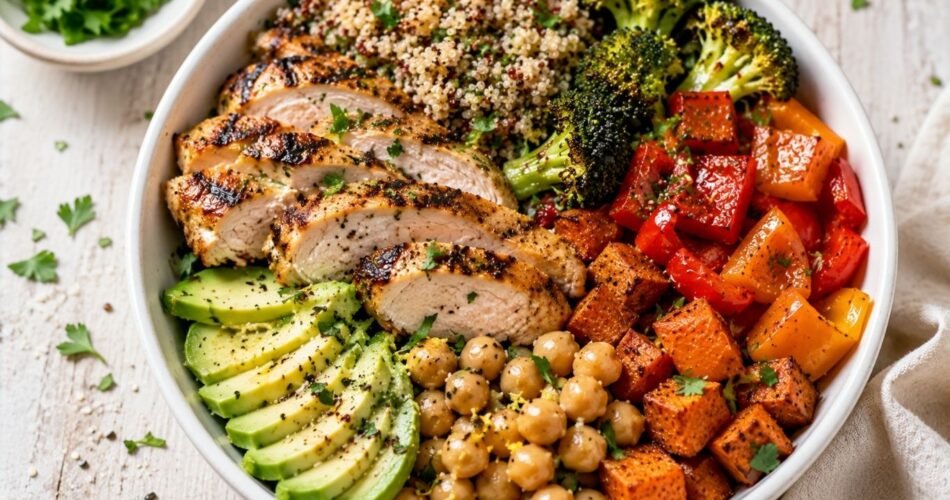
Going too lean and ending up hungry: A plain chicken breast with steamed broccoli might look “healthy,” but it’s boring and won’t keep you full. Add avocado, nuts, a drizzle of olive oil, or a flavorful sauce. Fat isn’t the enemy—it’s essential for satiety and energy.
Forgetting vegetables entirely: Protein alone doesn’t cut it. You need the fiber and nutrients from vegetables to balance your meal and prevent that heavy, sluggish feeling.
Eating the same thing every single day: Meal prep is smart, but eating identical lunches Monday through Friday is a recipe for burnout. Prep components instead of complete meals—cook several proteins, roast different vegetables, make a couple different grains. Mix and match throughout the week.
Quick Prep Strategies for Real Life
I batch-cook proteins on Sunday and Wednesday evenings. Two cooking sessions per week means nothing stays in the fridge too long, and I have variety. One session might be grilled chicken and hard-boiled eggs; the next could be ground turkey taco meat and baked salmon.
Invest in good containers—ones that don’t leak, that stack neatly, and that you can grab quickly in the morning. I use glass containers for anything with sauce and lightweight plastic for salads and grain bowls.
Keep your pantry stocked with protein-rich staples: canned tuna and salmon, canned beans, nut butters, Greek yogurt, cottage cheese, nuts, and seeds. On days when you haven’t prepped anything, you can still throw together a high-protein lunch in minutes.
Mason jar salads work great for keeping ingredients fresh. Layer dressing on the bottom, then hardy vegetables, then protein, then grains, then delicate greens on top. Shake it up when you’re ready to eat.
Making It Work For You
The best high-protein lunch is the one you’ll actually eat. If you hate meal prep, focus on super-simple combinations: Greek yogurt with nuts and fruit, canned salmon over mixed greens, or a quick egg scramble with vegetables. If you love cooking, try more involved recipes on weekends when you have time.
Plant-based eaters can hit 25-35 grams of protein easily by combining sources: lentils with quinoa, tofu with edamame, tempeh with beans. Don’t stress about getting “complete” proteins at every meal—your body combines amino acids throughout the day.
Budget-conscious? Eggs are your best friend at roughly 25 cents per egg with 6 grams of protein. Canned fish, dried beans, and chicken thighs are all affordable protein powerhouses. Ground turkey and cottage cheese are also typically cheaper than premium cuts of meat or fancy protein products.
The energy difference you’ll feel from prioritizing protein at lunch is honestly remarkable. Your afternoons become productive instead of a slog. You stop reaching for sugar or caffeine to compensate for an energy crash that never comes. You feel satisfied, focused, and ready to handle whatever the day throws at you—all from making smarter choices about what goes in your lunch container.
Start with one or two of these ideas this week. Pay attention to how you feel two, three, four hours after eating. I’m willing to bet you’ll notice the difference, and that afternoon slump will become a thing of the past.