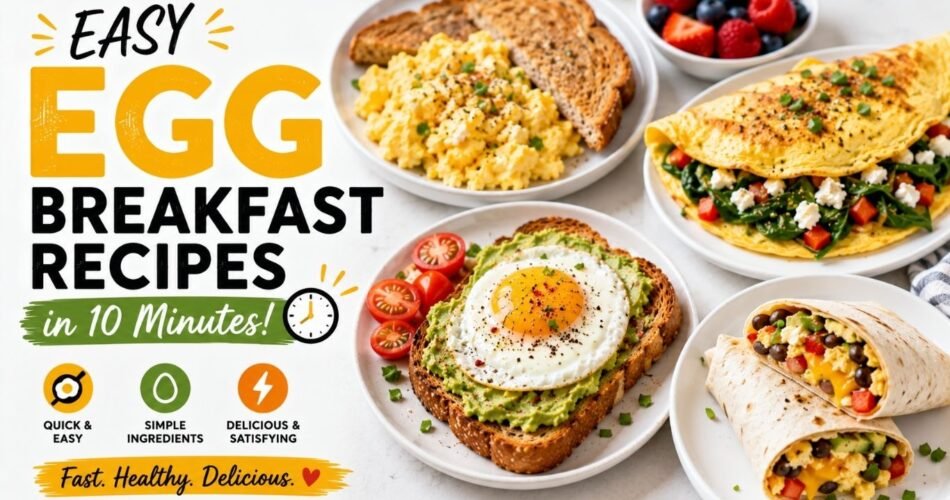
You know that feeling — it’s 7:48 AM, you have about twelve minutes before you need to be out the door, your coffee is already going cold, and you haven’t eaten anything yet. The last thing you want is to stand over a stove babysitting something complicated.
That’s exactly why eggs have become my most-reached-for ingredient on weekday mornings. They’re fast, filling, and — honestly — kind of endlessly flexible. In the time it takes to scroll through a food delivery app, you could have a proper hot breakfast sitting on your plate.
I’ve been making quick egg breakfasts for years, and over time I’ve figured out what actually works when you’re rushing, what mistakes kill the texture, and how to keep things interesting enough that you’re not eating the exact same boring scramble every single morning. That’s what this post is really about — practical, real-life egg breakfasts that fit inside a 10-minute window and actually taste good.
Why Eggs Are the MVP of Quick Morning Protein
Before getting into the actual recipes, it’s worth understanding why eggs hold up so well as a fast breakfast option. One large egg has about 6 grams of protein and a solid mix of healthy fats, B vitamins, and choline — a nutrient that supports brain function, which is something most of us could use more of before 9 AM.
Protein matters at breakfast more than people realize. It stabilizes blood sugar, keeps you full longer, and prevents that mid-morning energy crash that usually ends with a vending machine decision. If you’re actively thinking about what you’re eating in the morning and why it matters, this resource on high-protein breakfast ideas for energy is genuinely worth reading alongside this post.
Eggs also cook in minutes. Like, literally two to four minutes for most preparations if you know what you’re doing. The challenge isn’t time — it’s technique and flavor. And that’s fixable.
The Mistakes That Ruin Quick Egg Breakfasts (And How to Avoid Them)
Before the recipes, let’s address the problems. Because if you’ve ever ended up with rubbery scrambled eggs or a weirdly watery omelet, it’s not your fault — it’s usually one of these things:
High heat is the enemy of texture. This is the biggest one. When you crank the burner trying to cook faster, eggs go from soft and creamy to rubbery in about thirty seconds. Medium or medium-low heat consistently produces better results, and the eggs still cook quickly — they just don’t seize up and get tough.
Overcooking in the pan. Eggs continue cooking from residual heat even after you take them off the stove. Pull them just before they look “done” and let the carry-over heat finish the job. This single habit will improve your scrambled eggs immediately.
Skipping salt. Eggs are bland without it. Season during cooking, not just at the table. A small pinch of salt while the eggs are cooking makes a real difference in flavor depth.
Too much liquid in scrambled eggs. Some people add a splash of milk or water, which is fine in small amounts. But too much makes the eggs thin and watery instead of creamy and pillowy. A teaspoon of milk or cream per two eggs is plenty.
5 Easy Egg Breakfast Recipes in 10 Minutes
1. Creamy Scrambled Eggs on Toast
This sounds simple because it is, but the method matters. Whisk two eggs with a small splash of cream (or oat milk if you’re dairy-free) and a pinch of salt. Melt about a teaspoon of butter in a non-stick pan over medium-low heat. Pour in the eggs and let them sit for ten seconds, then start folding gently with a spatula — not stirring frantically, just slow folds.
Take the pan off the heat while the eggs still look slightly underdone. They’ll finish cooking in about 30 seconds from the residual heat. Pile them onto toasted sourdough, top with a crack of black pepper, and if you have it — a small scattering of fresh chives or even just a flake of sea salt on top.
The whole thing takes under five minutes. The texture when done this way is genuinely restaurant-quality: soft, creamy, rich. Add shredded cheddar during the last fold if you want something more substantial.
Variations: Swap butter for olive oil for a slightly lighter flavor. Try feta crumbled on top instead of cheddar. For dairy-free, skip the cream and butter entirely — coconut oil and a tiny bit of plant-based cream works surprisingly well.
2. Five-Minute Microwave Egg Mug
Okay, hear me out. I know “microwave eggs” sounds like something you’d only do in a hotel room, but a well-made egg mug is genuinely good and takes about three minutes flat.
Spray a large microwave-safe mug with a bit of cooking spray. Crack in two eggs, add a tablespoon of milk, salt, pepper, and whatever you have — I usually throw in a spoonful of salsa, a pinch of shredded cheese, and a few frozen spinach leaves that I keep in the freezer exactly for this purpose. Stir it up. Microwave on high for 60 seconds, stir, then another 30–45 seconds until just set. Don’t overdo it — stop as soon as the center looks just barely done.
Eat it straight from the mug with a fork, or scoop it onto toast. It’s honestly filling and satisfying, and the cleanup is one mug. On the mornings where even five minutes feels like a lot, this is the move.
3. Quick Veggie Omelet
Omelets have a reputation for being fussy, but they don’t have to be. The trick is keeping the filling simple and already prepped.
Beat two eggs with a pinch of salt. Heat a small non-stick pan over medium heat with a bit of butter or oil. Pour in the eggs and let the edges set, then gently push the cooked edges toward the center while tilting the pan so the liquid egg runs underneath. Once the top is mostly set but still slightly glossy, add your filling to one half — shredded cheese, diced bell pepper, maybe some leftover roasted veggies — then fold the other half over and slide it onto a plate.
The filling options are really where you can make this your own. I’ve used everything from leftover taco meat to jarred sun-dried tomatoes to just plain swiss cheese and Dijon mustard. Keep a few prepped veggie options in the fridge and you’ll never make the same omelet twice.
For anyone interested in using eggs as part of a more intentional approach to nutrition, pairing this with some greens or grain on the side turns it into the kind of breakfast you’ll find over at healthy breakfast bowls for weight loss — satisfying, balanced, and genuinely useful.
4. Fried Egg Avocado Toast (With an Upgrade)
Yes, avocado toast is everywhere. No, that doesn’t mean it’s not worth making. The version I make most often takes about six minutes and actually keeps me full until lunch.
Toast your bread while you heat a thin layer of oil in a pan over medium heat. Crack the egg in, cover the pan with a lid, and let it cook for about two minutes. The steam from the lid cooks the top of the egg so you get a set white without having to flip — which means no broken yolk and no stress. Smash half an avocado on the toast with a squeeze of lemon juice, salt, and red pepper flakes. Top with the egg.
The upgrade I always add: everything bagel seasoning on the avocado before the egg goes on. It sounds small but it completely changes the flavor profile.
Quick swaps: No avocado? Ricotta or hummus spread on toast works beautifully under a fried egg. No bread? Serve the egg over a quick sauté of spinach and tomatoes instead.
5. Sheet Pan Baked Eggs (Ideal for Two or Batch)
This one requires your oven, but if you’re making breakfast for two — or want to prep multiple servings at once — it’s incredibly efficient. Preheat your oven to 400°F. Use a small baking dish or individual ramekins, add a spoonful of marinara or crushed tomatoes to the bottom, crack eggs on top, add a bit of cheese and some Italian seasoning, and bake for 8–10 minutes until the whites are set but the yolks are still slightly soft.
Serve with crusty bread for dipping. It takes the same amount of active time as a scramble but feels way more like a proper sit-down breakfast — good for weekends when you have ten minutes but want it to feel a little more special.
Time-Saving Tips That Actually Help
A few habits that have genuinely made my mornings faster:
- Keep a bag of pre-washed spinach in the fridge. It goes in everything — eggs, wraps, mugs — and takes zero prep.
- Shred your own cheese in bulk on Sunday. Pre-shredded cheese has coating on it that prevents smooth melting. Fresh-shredded tastes noticeably better.
- Keep frozen veggies like diced peppers and spinach in the freezer specifically for egg fillings. No chopping required.
- A non-stick pan matters. It doesn’t need to be expensive, but eggs in a bad pan are a frustrating experience. A decent non-stick makes cooking and cleanup dramatically easier.
- Mise en place, even for eggs. It takes 60 seconds to crack your eggs into a bowl, set out your seasonings, and have your toppings ready before you turn on the heat. This alone prevents overcooking because you’re not scrambling to find the cheese while your eggs are burning.
Serving Ideas and Pairing Suggestions
Eggs on their own are great, but a few simple additions round out the meal:
- Fresh fruit on the side — sliced banana, berries, whatever’s in season
- A small glass of orange juice or a smoothie if you want something more substantial
- Greek yogurt with honey if you need extra protein without extra cooking
- Hot sauce — Cholula, Sriracha, or a good chili crisp — to add depth to even the simplest preparation
The Bottom Line
Quick egg breakfasts aren’t about settling for something boring because you’re rushed. With a little bit of technique and a few smart habits, you can make something that’s genuinely satisfying in under ten minutes, most mornings.
The recipes here aren’t complicated or trendy — they’re just good, practical food that works in real life. Some mornings you’ll have five minutes and make a mug egg. Other mornings you’ll have ten and make a proper omelet. Either way, eggs have you covered.
Keep your fridge stocked with a few simple additions — good cheese, some fresh herbs, a jar of salsa or hot sauce — and breakfast never has to be the stressful part of your morning.