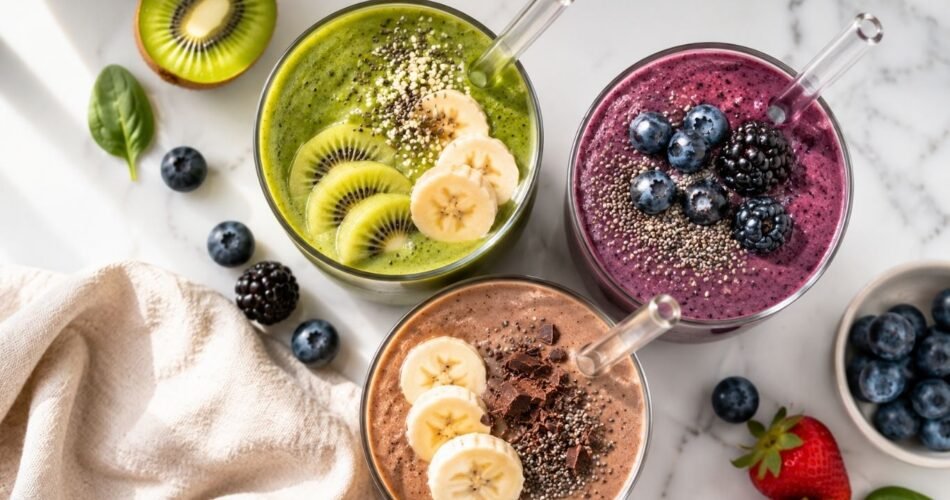
I’ll be straight with you — I used to think smoothies were a diet gimmick. A glorified juice with some spinach thrown in to feel virtuous. I’d make one, be hungry again in 40 minutes, and reach for a bag of chips while wondering where it all went wrong.
The problem wasn’t smoothies. It was that I didn’t know how to build one properly.
Once I started actually learning about the balance of macronutrients — protein, fat, fiber — everything shifted. My smoothies went from sad, watery fruit blends to thick, creamy, legitimately satisfying meals that carried me through busy mornings without a single craving spike. And yes, I lost weight doing it. Not because smoothies are magic, but because I stopped being hungry all the time.
This collection is everything I’ve learned over the past few years of smoothie trial and error. Some of these recipes I make on rotation every week. Others I created for specific moods or cravings. All of them are built on real nutritional logic, not just “throw some kale in and call it healthy.”
If you’re looking for quick, filling options beyond just smoothies, I also have a roundup of quick breakfast ideas for busy mornings that pairs really well with this post.
Let’s get into it.
The Golden Rules of a Weight-Loss Smoothie
Before the recipes, here’s what changed everything for me:
1. Protein is non-negotiable. A smoothie without protein is basically dessert. Add Greek yogurt, protein powder, cottage cheese, hemp seeds — something. Aim for at least 15–20g.
2. Fat slows everything down (in a good way). A tablespoon of almond butter, some avocado, a few walnuts — fat signals to your brain that you’re full. Don’t skip it.
3. Fiber is your best friend. Chia seeds, flaxseeds, frozen cauliflower (yes, really), or a handful of leafy greens all add bulk and slow digestion.
4. Watch the fruit load. Two cups of mango sounds healthy. It’s also a ton of sugar. Balance sweet fruit with vegetables, protein, and fat.
5. Liquid matters. Juice adds sugar you don’t need. Unsweetened almond milk, coconut water, regular water, or kefir work better depending on the recipe.
1. The Classic Green Detox Smoothie
This is the one I make when I’ve had a few indulgent days and my body just wants something clean. It’s mild enough to not taste like a lawn, and filling enough to replace breakfast.
Ingredients:
- 1 cup fresh baby spinach
- ½ frozen banana (the frozen part is key — it creates creaminess)
- ½ cup frozen mango chunks
- 1 tablespoon chia seeds
- 1 cup unsweetened almond milk
- Juice of half a lemon
- Small piece of fresh ginger (about ½ inch), peeled
- Optional: 1 scoop vanilla protein powder
Instructions:
- Add the almond milk to your blender first — this protects the blades and helps everything blend smoother.
- Toss in the spinach and blend just the greens and liquid for about 20 seconds before adding anything else. This prevents leafy chunks.
- Add the frozen banana, mango, chia seeds, lemon juice, and ginger.
- Blend on high for 60–90 seconds until completely smooth. If it’s too thick, add a splash more almond milk. Too thin? Add a few ice cubes.
- Drink immediately or pour into a jar and refrigerate for up to 4 hours.
Why it works: Spinach is nearly calorie-free but loaded with iron and fiber. The frozen mango brings sweetness without spiking blood sugar as fast as juice would. Chia seeds expand in your stomach and keep you full for hours.
Common mistake: Using fresh banana instead of frozen. Fresh banana makes your smoothie warm and thin. Always freeze your bananas when they’re just ripe, then break them into chunks and store in a zip-lock bag.
2. Peanut Butter Chocolate Protein Smoothie
This one is for people (like me) who would otherwise reach for something chocolate by mid-morning. It tastes like a dessert, but it has enough protein and fiber to actually be a legitimate meal.
Ingredients:
- 1 scoop chocolate protein powder
- 1 tablespoon natural peanut butter
- 1 cup unsweetened oat milk
- 1 frozen banana
- 1 tablespoon cacao powder (not cocoa mix — actual raw cacao)
- 1 tablespoon flaxseed meal
- 4–5 ice cubes
Instructions:
- Add oat milk to the blender, then layer in everything else.
- Blend for 90 seconds on high. Chocolate and peanut butter blends tend to be thick — if your blender struggles, add liquid slowly until it moves freely.
- Taste before pouring. Sometimes cacao is bitter depending on the brand. Add a tiny drizzle of honey or half a Medjool date if needed.
Swap ideas: Can’t do peanut butter? Sunflower seed butter works beautifully and is allergy-friendly. Almond butter is great too but slightly less creamy. For dairy-free protein powder, pea protein blends really well here without getting chalky.
Pro tip: Freeze your banana the night before every time. Just make it a habit. It takes 10 seconds and changes the whole texture of your smoothie.
3. Strawberry Oat Breakfast Smoothie
Oats in a smoothie sound weird until you try it. Then you wonder why you didn’t do this sooner. They add creaminess, fiber, and slow-digesting carbs that keep your energy steady instead of spiking and crashing.
Ingredients:
- ½ cup rolled oats (old-fashioned, not instant)
- 1 cup frozen strawberries
- ½ cup plain Greek yogurt (full fat — don’t be afraid of it)
- 1 cup unsweetened almond milk
- 1 teaspoon honey
- ½ teaspoon cinnamon
- Pinch of vanilla extract
Instructions:
- Here’s a little trick: blend the oats alone for 20–30 seconds first to turn them into a fine powder. This prevents that gritty texture people complain about.
- Add everything else and blend until smooth and creamy — usually about 60 seconds.
- This one gets thick fast because of the oats and yogurt. Have extra almond milk nearby.
Why full fat yogurt? Because fat helps you absorb fat-soluble vitamins, keeps you satisfied, and frankly tastes better. Low-fat yogurt often has added sugar to compensate for flavor — check the label before assuming it’s the healthier choice.
Storage note: This one actually holds up really well overnight. Make it the night before, store in a sealed jar in the fridge, and shake or stir before drinking. The oats absorb liquid and it thickens even more, which some people prefer.
4. Tropical Coconut Metabolism Booster
This is a lighter, more refreshing smoothie for warmer days or post-workout. The MCTs in coconut milk and the enzymes in pineapple and papaya genuinely support digestion, and the whole thing feels like vacation in a glass.
Ingredients:
- ½ cup frozen pineapple chunks
- ½ cup frozen mango
- ¼ cup fresh or frozen papaya
- ½ cup canned full-fat coconut milk (not coconut water — the milk is creamier)
- ½ cup water or coconut water
- Juice of 1 lime
- 1 tablespoon hemp seeds
- Pinch of cayenne pepper (optional, but it does boost metabolism slightly)
Instructions:
- Blend everything on high until completely smooth. Tropical fruits blend easily so this one comes together fast.
- Taste for sweetness — depending on ripeness of the fruit, you may not need anything extra. But if it’s tart, a drizzle of honey or a couple of Medjool dates will balance it.
- Pour over a big glass of ice and drink immediately. This one doesn’t store well because the tropical flavor gets a bit muddled.
The cayenne note: Add just a pinch. We’re not making hot sauce. A tiny amount adds a subtle warmth and pairs surprisingly well with the lime and mango. It does increase thermogenesis slightly — not dramatically, but every little bit helps when you’re consistent.
5. Creamy Avocado Spinach Smoothie
This might sound questionable but hear me out. Avocado in a smoothie is life-changing. It makes the texture ultra-thick and creamy, adds healthy monounsaturated fats, and is almost flavorless — meaning the other ingredients shine.
Ingredients:
- ½ ripe avocado
- 1 large handful baby spinach
- 1 frozen banana
- 1 cup unsweetened almond milk
- 1 tablespoon honey or maple syrup
- ½ teaspoon vanilla extract
- Juice of half a lime
- Ice as needed
Instructions:
- Add liquid first, then greens, then everything else.
- Blend for 90 full seconds. Avocado needs time to fully incorporate.
- The result should be thick, almost pudding-like. If you want it thinner, add almond milk in small increments.
Mistake I made early on: Using a mushy, over-ripe avocado. The flavor gets weird and slightly fermented. Use one that’s just perfectly ripe — it should give slightly when pressed but not feel squishy.
Variation: Add a scoop of vanilla protein powder and it becomes a legitimately great post-workout smoothie. The combination of healthy fat, protein, and natural carbs from the banana is basically ideal recovery fuel.
6. Blueberry Almond Antioxidant Smoothie
Blueberries are one of the best fruits you can put in a smoothie for weight loss. They’re low in sugar compared to most fruits, incredibly high in antioxidants, and they turn everything a gorgeous deep purple that makes you feel like you’re doing something right.
Ingredients:
- 1 cup frozen blueberries
- 2 tablespoons almond butter
- 1 cup unsweetened almond milk
- ½ cup plain Greek yogurt
- 1 tablespoon ground flaxseed
- ½ teaspoon cinnamon
- Optional: 1 teaspoon spirulina powder
Instructions:
- Add almond milk, then yogurt, almond butter, blueberries, and finally the dry ingredients.
- Blend for 60–90 seconds. Almond butter can clump — keep blending until it’s fully incorporated.
- The spirulina is optional but I’d encourage you to try it. Start with just half a teaspoon until you get used to the flavor. It adds a ton of nutrition and pairs surprisingly well with blueberry.
Real talk on spirulina: The first time I added too much and it tasted like the ocean in a bad way. Half a teaspoon is the sweet spot. It will turn your smoothie a darker, almost brownish-green color — don’t let that scare you.
Tips for Making Smoothies a Real Habit
Recipes are only useful if you actually use them. Here’s what keeps me consistent:
Pre-pack smoothie bags. On Sunday, portion your frozen fruit and veggies into individual zip-lock bags. Every morning, grab a bag, dump it in the blender with your liquid and add-ins. Done in under 5 minutes.
Invest in a decent blender. You don’t need the most expensive one, but a truly underpowered blender will leave chunks and make the whole experience frustrating. A mid-range blender in the $60–100 range handles most of these recipes perfectly.
Rotate your greens. Don’t just use spinach every single day. Rotate in kale, Swiss chard, romaine, or even frozen cauliflower. Each has a different micronutrient profile, and your body actually absorbs more when you vary the source.
Don’t rely on smoothies exclusively. They’re a great tool, not a total solution. A balanced approach to eating — whole foods, mindful portions, real meals — is what creates lasting change.
Storage Tips
Most smoothies are best consumed immediately, but here’s when you can store them:
- Green smoothies: Store in an airtight jar with minimal air space for up to 24 hours. Add a squeeze of lemon or lime — the acid helps prevent oxidation.
- Oat-based smoothies: These actually improve overnight in the fridge. The oats soak up liquid and create a thicker, almost breakfast bowl consistency.
- Avocado smoothies: Drink these fresh. The avocado oxidizes quickly and the flavor deteriorates.
A Few Words on Weight Loss and Smoothies
Smoothies won’t do the work for you — and any post that promises otherwise is selling you something. What they can do is make it significantly easier to eat well when you’re busy, tired, or just don’t feel like cooking.
The goal is to replace a meal that would have been less nutritious — not to add a smoothie on top of everything else you’re already eating. These recipes are designed to be filling, balanced, and satisfying enough to stand in as a real breakfast or lunch.
If you’re looking for other genuinely satisfying meal options throughout your week, the quick breakfast ideas for busy mornings post has some great options that complement a smoothie-based routine without requiring much cooking time.
Start with one recipe, make it a few times until it feels automatic, then add another. That’s it. No overhaul needed.
Conclusion
Healthy eating doesn’t have to be complicated, expensive, or miserable — and neither do smoothies. The six recipes here cover a range of flavors, textures, and nutritional goals, so there’s genuinely something for every mood and every morning.
The key takeaways: build every smoothie with protein, fat, and fiber. Don’t fear full-fat ingredients. Freeze your bananas. Prep on Sundays.
Give one of these a try this week and I think you’ll be surprised how different a properly built smoothie feels compared to those thin, sugary ones. Real food, real satisfaction, real results.