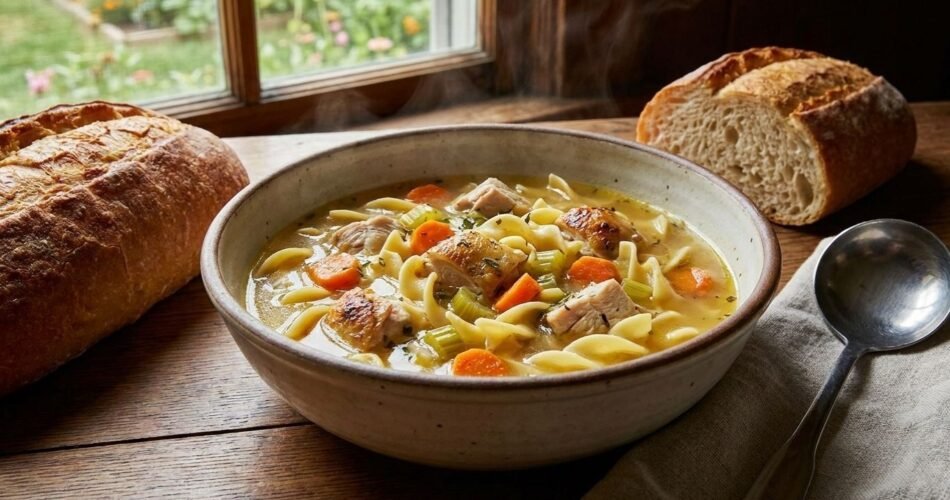
There’s something almost magical about a steaming bowl of homemade chicken noodle soup. It fixes bad days, soothes sore throats, and honestly? It’s one of those recipes that makes you feel like you’ve got your life together, even when you absolutely don’t.
I’ll never forget the first time I made chicken noodle soup from scratch. I was 23, living in a tiny apartment, and convinced I could “improve” the recipe by adding fancy ingredients nobody asked for. Truffle oil. Sun-dried tomatoes. Yeah, it was a disaster. My roommate took one sip and asked if I’d accidentally grabbed the wrong pot.
That failure taught me the most important lesson about this soup: simplicity wins. Every single time.
This homemade chicken noodle soup recipe is what I make now—no truffle oil in sight. It’s ready in about 50 minutes (yes, really), uses ingredients you probably already have, and creates a broth so good you’ll want to drink it straight from the pot. Don’t pretend you’ve never done that. We all have.
Perfect for busy weeknights when you need something nourishing fast, meal prep Sundays, or those days when only soup will do.
WHY THIS RECIPE ACTUALLY WORKS
I’ve tested this recipe more times than I can count, and here’s what makes it different from the hundred other chicken noodle soup recipes floating around the internet.
We’re using bone-in, skin-on chicken thighs. Most recipes call for boneless, skinless chicken breasts because they’re “convenient.” But here’s the truth: bones and skin create a richer, more flavorful broth. The gelatin from the bones gives you that silky mouthfeel, and the fat from the skin? That’s where the flavor lives. You’ll remove the skin before serving, but it does its job while cooking.
The vegetables go in at different times. This isn’t a “dump everything in and walk away” situation. Aromatics like onion and garlic get sautéed first to develop their sweetness. Carrots and celery go in early so they become tender but not mushy. This layering of flavors is what separates “meh” soup from “can I have seconds?” soup.
We’re blooming the herbs in the sautéed vegetables. When you add dried thyme and bay leaves to the hot oil with your aromatics, you wake up their essential oils. It’s called blooming, and it intensifies their flavor about three times. Fresh herbs at the end add brightness, but dried herbs at the beginning add depth.
The noodles cook separately (optional but recommended). I know, I know—one more pot to wash. But cooking noodles directly in the soup makes them absorb too much broth and get mushy if you’re storing leftovers. If you’re serving it all immediately, go ahead and cook them in the pot. For meal prep? Cook them separately.
We shred the chicken, not cube it. Shredded chicken soaks up more broth and creates better texture in every spoonful. Those sad little chicken cubes just bounce around. Nobody wants that.
KEY INGREDIENTS & SMART SUBSTITUTIONS
Bone-in, skin-on chicken thighs (1½ pounds): These create the richest broth, but you can use a whole cut-up chicken, chicken legs, or even a rotisserie chicken carcass with some extra meat added.
Chicken broth (6 cups): Yes, we’re using store-bought broth even though we’re adding chicken—this gives you amazing flavor in under an hour instead of the 3+ hours true chicken stock requires. Low-sodium is best so you control the salt.
Egg noodles (8 oz): Classic choice, but use any pasta you want—rotini, shells, or even orzo. For gluten-free, brown rice noodles work perfectly.
Carrots (3 medium, sliced): They add subtle sweetness and that classic soup look. Parsnips work too if you want something a little different.
Celery (3 stalks, sliced): Essential for traditional flavor, but if you’re like my husband who thinks celery tastes like crunchy water, you can use all carrots instead.
Yellow onion (1 large, diced): The aromatic base. White onion works fine, but skip red onion—it’s too sharp for this.
Garlic (4 cloves, minced): Fresh only, please. Jarred garlic gets weirdly bitter when simmered this long.
Bay leaves (2): These add a subtle earthiness you can’t quite put your finger on, but you’d miss it if it wasn’t there.
Fresh thyme or dried thyme: Fresh is lovely, but dried works beautifully and that’s usually what I have.
Fresh parsley: Brightens everything up at the end. Cilantro would be weird here, but dill? Actually pretty great.
Olive oil or butter: Either works for sautéing. Butter adds richness, olive oil keeps it lighter.
Salt and black pepper: You’ll adjust these at the end. Always taste before serving.
HOW TO MAKE HOMEMADE CHICKEN NOODLE SOUP
Step 1: Sauté the aromatics
Heat 2 tablespoons of olive oil or butter in a large pot (at least 6-quart) over medium heat. Add your diced onion and cook for about 4-5 minutes until it’s soft and turning translucent. You’ll see it go from bright white to almost see-through. That’s when it’s ready.
Add the minced garlic, dried thyme (1 teaspoon if using dried), and stir for about 30 seconds. You’ll smell it immediately—sharp, pungent, amazing.
What to look for: The garlic should be fragrant but not brown. If it browns, it gets bitter.
Common mistake: Cooking garlic too long. It goes from perfect to burnt in about 15 seconds, so watch it.
Chef’s Note: If your onions are browning too fast, your heat is too high. Medium heat means you should hear a gentle sizzle, not an aggressive pop and crackle.
Step 2: Add the liquids and chicken
Pour in 6 cups of chicken broth and 2 cups of water. Drop in your chicken thighs, bay leaves, and add about 1 teaspoon of salt and ½ teaspoon of black pepper. We’ll adjust later.
Bring everything to a boil over high heat, then immediately reduce to a gentle simmer. You want small bubbles breaking the surface, not a rolling boil.
What to look for: The chicken should be mostly submerged. If it’s not, add a bit more water.
Common mistake: Boiling the heck out of it. A hard boil makes the chicken tough and the broth cloudy. Low and slow, friends.
Chef’s Note: That foamy scum that rises to the top in the first few minutes? Skim it off with a spoon. It’s just proteins coagulating, totally harmless, but your broth will be clearer without it.
Step 3: Simmer the chicken
Let the chicken simmer gently for 25-30 minutes until it’s cooked through. You’ll know it’s done when the meat pulls away from the bone easily and reaches 165°F internal temperature.
Remove the chicken pieces with tongs and put them on a cutting board. Let them cool for about 5 minutes.
What to look for: The chicken should be tender and fully cooked, but not falling apart yet.
Common mistake: Not letting the chicken cool before shredding. You’ll burn your fingers. Learn from my mistakes.
Chef’s Note: While the chicken cools, this is a great time to taste your broth. It should already be flavorful. If it tastes flat, add a bit more salt.
Step 4: Add the vegetables
While your chicken cools, add the sliced carrots and celery to the simmering broth. Cook for about 8-10 minutes until they’re tender but still have a slight bite. They’ll continue cooking a bit more, so you don’t want them mushy now.
What to look for: A fork should pierce the carrot easily, but it shouldn’t be so soft it’s falling apart.
Common mistake: Cutting your vegetables in wildly different sizes. That chunky carrot piece will still be crunchy while the thin one turns to mush. Keep them uniform.
Chef’s Note: I cut my carrots and celery about ¼-inch thick on a slight diagonal. It’s classic soup cut, and it looks prettier than straight chunks.
Step 5: Shred the chicken and return it to the pot
Once the chicken is cool enough to handle, remove and discard the skin and bones. Use two forks (or your hands) to shred the meat into bite-sized pieces.
Return the shredded chicken to the pot. Stir it in.
What to look for: Pieces that are roughly the same size so you get chicken in every bite.
Common mistake: Making the pieces too big. Nobody wants to wrestle with a giant chicken chunk on their spoon.
Chef’s Note: Sometimes I leave a few slightly bigger pieces for texture variety. Keeps things interesting.
Step 6: Cook the noodles
If you’re cooking the noodles separately (recommended for leftovers), cook them in a separate pot according to package directions, drain, and add them to individual bowls when serving.
If you’re adding them to the soup pot, bring the soup back to a gentle boil, add the egg noodles, and cook for about 6-8 minutes until tender. Stir occasionally so they don’t stick.
What to look for: Tender noodles that still have a slight chew. Taste one to test.
Common mistake: Adding the noodles too early. They’ll overcook and get gummy.
Chef’s Note: If you do cook the noodles in the soup, they’ll absorb broth as the soup sits. You might need to add a splash of water or broth when reheating leftovers.
Step 7: Final seasoning and serving
Remove the bay leaves (very important—they’re not meant to be eaten). Taste your soup and adjust the salt and pepper. It probably needs more salt than you think. Add it gradually, tasting as you go.
Stir in about ¼ cup of fresh chopped parsley right before serving.
Ladle into bowls and serve with crusty bread, oyster crackers, or just a spoon and your full attention.
What to look for: Balanced flavor. It should taste bright, savory, comforting. If it tastes flat, add salt. If it tastes one-dimensional, a squeeze of fresh lemon juice works magic.
Common mistake: Forgetting to remove the bay leaves. Finding one in your mouth is not fun.
Chef’s Note: A tiny pinch of red pepper flakes adds a subtle warmth that makes people wonder what your secret is. Just a pinch—this isn’t supposed to be spicy.
Read — Lemon Blueberry Bars Recipe
Read — Gnocchi alla Norma Recipe
Read — Strawberry Oatmeal Breakfast Bars
Read — Perfect Panna Cotta Recipe
TROUBLESHOOTING & FAQs
Q: Can I freeze this chicken noodle soup?
Yes! But freeze it without the noodles. Noodles get mushy and weird when frozen and thawed. Freeze the soup in airtight containers for up to 3 months, then add freshly cooked noodles when you reheat it. Trust me on this one.
Q: My soup tastes bland. What did I do wrong?
Probably didn’t add enough salt. It sounds simple, but under-salting is the #1 reason homemade soup tastes “meh.” Add it gradually, tasting as you go. Also, did you skip sautéing the aromatics? That step builds foundational flavor you can’t add later. Another fix: a splash of lemon juice or apple cider vinegar brightens everything up.
Q: The broth is greasy. How do I fix it?
That’s from the chicken skin and fat. You’ve got two options: 1) Skim the fat off the top with a spoon while it’s hot, or 2) Refrigerate the soup overnight—the fat will solidify on top and you can just lift it off. Some fat is good (it’s flavorful!), but if there’s a thick layer, remove most of it.
Q: Can I use chicken breasts instead of thighs?
You can, but the soup won’t be as rich and flavorful. If you do use breasts, reduce the cooking time to about 15-20 minutes—they cook faster and dry out easily. Bone-in breasts are better than boneless for this. Or just buy a rotisserie chicken, shred the meat, and simmer the carcass in the broth for 20 minutes before straining it. That’s my lazy-day shortcut.
Q: Why are my vegetables mushy?
You either cut them too small or cooked them too long. Vegetables should go in after the chicken has been simmering for a while, not at the beginning. And they only need 8-10 minutes to get tender. If you’re meal prepping, slightly undercook them—they’ll soften more when you reheat.
STORAGE, REHEATING, AND MEAL PREP
Refrigerator Storage:
Store cooled soup in airtight containers in the fridge for up to 4 days. If you cooked the noodles in the soup, be aware they’ll keep absorbing liquid. You might need to add a splash of broth or water when reheating.
Pro tip: Store the noodles separately from the soup if you’re meal prepping. It takes an extra container, but your soup will taste freshly made every time.
Freezer Storage:
Freeze soup WITHOUT noodles in freezer-safe containers or heavy-duty freezer bags for up to 3 months. Leave about an inch of space at the top—liquid expands when frozen.
Label with the date. You think you’ll remember, but three months from now, you won’t.
Reheating:
From the fridge: Reheat gently on the stovetop over medium-low heat, stirring occasionally. Microwave works too—2-3 minutes on high, stirring halfway through.
From frozen: Thaw overnight in the fridge first, then reheat on the stovetop. If you’re in a hurry, you can reheat from frozen—just put the frozen block in a pot over low heat and break it up as it melts. It takes about 15-20 minutes.
Meal Prep Strategy:
This soup is perfect for Sunday meal prep. Make a big batch, portion it into individual containers (about 2 cups each), and you’ve got lunch for the week. I like to pack the noodles separately in small containers or bags and add them when I’m ready to eat.
The flavors actually get better after a day in the fridge as everything melds together.