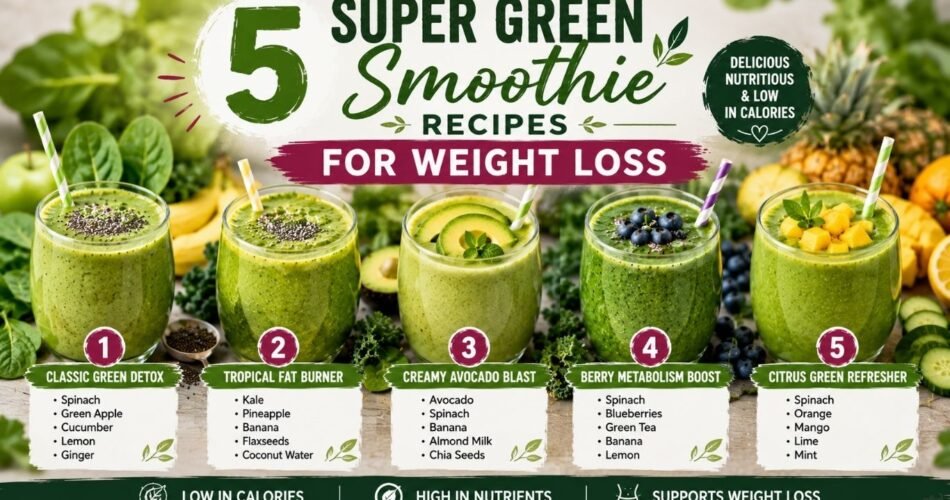
If you’ve been scrolling through wellness content long enough, you already know green smoothies have a serious reputation. But here’s the thing — most people blend a handful of spinach with some frozen mango, call it a day, and wonder why they’re hungry again an hour later.
Real green smoothies for weight loss are a little more strategic than that.
After experimenting with dozens of combinations in my own kitchen (and yes, suffering through a few genuinely terrible ones), I’ve landed on five recipes that actually keep you full, taste good enough to drink regularly, and genuinely support fat loss — not just water weight.
These aren’t just “pretty green drinks.” Each one is built around ingredients that work together: fiber to slow digestion, protein to protect muscle, healthy fats to keep hunger at bay, and greens packed with micronutrients your body needs when you’re in a calorie deficit.
Whether you’re trying to replace a heavy breakfast, cut back on afternoon snacking, or just clean up your diet without feeling deprived, these smoothies are worth adding to your weekly rotation.
Let’s get into it.
What Makes a Green Smoothie Actually Good for Weight Loss?
Before we dive into the recipes, it’s worth knowing what separates a weight-loss smoothie from just a blended salad or a sugar bomb in disguise.
The best green smoothies for weight loss share a few common traits:
- High fiber content — keeps you full longer and supports gut health
- Adequate protein — prevents muscle loss during a calorie deficit and reduces appetite
- Low added sugar — uses whole fruits instead of juice, syrups, or sweetened yogurts
- Healthy fats — from avocado, nut butter, chia seeds, or flaxseeds to slow digestion
- Nutrient density — leafy greens deliver vitamins and minerals without adding significant calories
A smoothie that checks all these boxes can genuinely replace a meal, support fat loss, and leave you feeling energized rather than sluggish.
Now, the recipes.
Recipe 1: The Classic Spinach and Banana Green Smoothie
Why It Works for Weight Loss
This is the smoothie I recommend to anyone just starting out — and not because it’s boring. It’s the foundation for a reason. Spinach is essentially calorie-free while delivering iron, folate, and vitamin K. Banana adds natural sweetness and potassium, which helps with bloating and water retention. Combined with Greek yogurt for protein and chia seeds for fiber and omega-3s, this smoothie is more filling than it looks.
It’s also one of the lowest-calorie options on this list, making it ideal if you’re in a moderate calorie deficit and need a breakfast that won’t blow your budget before 9 AM.
Key Ingredients
- 1 cup fresh baby spinach
- 1 medium ripe banana (frozen works best)
- ¾ cup plain Greek yogurt (non-fat or 2%)
- 1 tablespoon chia seeds
- ½ cup unsweetened almond milk
- ½ teaspoon vanilla extract
- 4–5 ice cubes
Nutrition Snapshot
| Detail | Amount |
|---|---|
| Estimated Calories | ~280 kcal |
| Protein | ~18g |
| Fiber | ~6g |
| Preparation Time | 5 minutes |
How to Make It
- Add the almond milk to the blender first — this helps the blades move freely from the start.
- Toss in the spinach and blend on low for about 20 seconds until the greens are broken down. This step prevents leafy chunks.
- Add the frozen banana, Greek yogurt, chia seeds, and vanilla extract.
- Blend on high for 45–60 seconds until completely smooth and creamy.
- Add ice cubes and blend for another 15 seconds.
- Pour immediately and drink within 15 minutes for the best texture and nutrient retention.
Nutrition Benefits
- Spinach: Rich in iron and magnesium, both of which support energy metabolism — important when you’re eating at a calorie deficit.
- Banana: Natural source of resistant starch (especially when slightly underripe), which feeds beneficial gut bacteria.
- Greek yogurt: Provides probiotics and a solid dose of casein protein, which digests slowly and keeps hunger suppressed.
- Chia seeds: Expand in your stomach and slow gastric emptying — meaning you stay full much longer.
Optional Add-Ins
- 1 scoop unflavored or vanilla protein powder (adds ~20g extra protein)
- ½ teaspoon spirulina for additional chlorophyll and B vitamins
- 1 tablespoon hemp seeds for extra omega-3 fatty acids
Healthy Substitutions
- No Greek yogurt? Use silken tofu — same creamy texture, similar protein content, and dairy-free.
- Banana-free version? Swap with ½ cup frozen mango or ½ a ripe pear for natural sweetness without banana’s higher sugar content.
- Almond milk alternatives? Oat milk adds a creamier texture; coconut water adds electrolytes.
Serving Tips
Drink this one in the morning on an empty stomach or within 30 minutes of waking up. The protein and fiber combination works especially well as a breakfast replacement. If you’re drinking it pre-workout, skip the chia seeds — they can cause digestive discomfort during intense exercise.
Recipe 2: Avocado and Kale Power Smoothie
Why It Works for Weight Loss
Avocado in a smoothie might sound indulgent, but hear me out. The healthy monounsaturated fats in avocado trigger satiety hormones (specifically CCK and GLP-1) that signal your brain you’re full. Studies consistently show that people who eat avocado regularly consume fewer calories throughout the day without actively trying.
Kale is the workhorse green here — it’s more nutrient-dense than spinach per gram and has a slightly bitter, earthy flavor that the avocado and apple perfectly balance. This smoothie is thicker and more filling than most, making it an excellent meal replacement for busy mornings.
If you enjoy building nutritious mornings, you might also find inspiration in these High-Protein Breakfast Ideas for Energy — some pair beautifully alongside a smoothie or can rotate with one throughout your week.
Key Ingredients
- 1 cup chopped kale (stems removed)
- ½ medium ripe avocado
- ½ green apple, cored and chopped
- 1 tablespoon freshly squeezed lemon juice
- 1 cup cold water or coconut water
- 1 tablespoon flaxseeds (ground)
- ½ inch fresh ginger, peeled
- 5–6 ice cubes
Nutrition Snapshot
| Detail | Amount |
|---|---|
| Estimated Calories | ~310 kcal |
| Protein | ~6g |
| Fiber | ~10g |
| Preparation Time | 7 minutes |
How to Make It
- Remove the kale stems — they make the texture stringy and the flavor bitter. Only use the leaf.
- Add coconut water to the blender, then kale.
- Blend on medium for 30 seconds until the kale is well broken down.
- Scoop in the avocado, add the apple chunks, lemon juice, ginger, and ground flaxseeds.
- Blend on high for 60–90 seconds. Kale is tougher than spinach and needs more time.
- Add ice and blend for 20 more seconds.
- Taste and adjust — more lemon if it’s too rich, more apple if you want sweetness.
Nutrition Benefits
- Kale: One of the highest-scoring vegetables on the ANDI (Aggregate Nutrient Density Index). Rich in vitamin C, vitamin K, and calcium.
- Avocado: High in oleic acid, which has been shown to reduce inflammation and improve fat metabolism.
- Flaxseeds: Contain lignans that may support hormonal balance, plus soluble fiber for gut health.
- Ginger: Supports digestion and has thermogenic properties that may marginally boost calorie burning.
- Lemon juice: Helps with iron absorption from the kale and adds a brightness that makes this smoothie actually enjoyable.
Optional Add-Ins
- 1 scoop vanilla pea protein powder (boosts protein to ~26g)
- ½ teaspoon turmeric with a pinch of black pepper for anti-inflammatory benefits
- 1 tablespoon apple cider vinegar — some research suggests it may reduce appetite slightly
Healthy Substitutions
- No kale? Swap with Swiss chard or a 50/50 mix of spinach and arugula.
- No avocado? Use 2 tablespoons of tahini — similar fat content and a different but delicious flavor profile.
- Lower calorie version? Reduce avocado to ¼ and skip flaxseeds, saving about 80 calories.
Serving Tips
This smoothie is thicker than most — you might want to eat it with a spoon or add an extra ¼ cup of water if you prefer drinking it. It keeps surprisingly well in the fridge for up to 4 hours in a sealed jar (press plastic wrap directly on the surface to prevent browning from the avocado).
Recipe 3: Cucumber Mint Detox Green Smoothie
Why It Works for Weight Loss
This one’s a little different. It’s not the highest in protein or the most calorically complex — and that’s intentional. The cucumber mint detox smoothie is designed for days when your digestion feels sluggish, you’re retaining water, or you just need something refreshing that won’t weigh you down.
Cucumber is about 96% water and contains compounds that act as mild natural diuretics. Combined with mint (which relaxes the digestive tract), celery, and spinach, this smoothie is genuinely cleansing — not in the pseudoscientific “detox” sense, but in the very real sense of supporting your liver, reducing bloating, and keeping your digestive system moving efficiently.
Optimal digestion is actually important for weight loss. When your gut is backed up or inflamed, nutrient absorption suffers and hunger signals get distorted.
Key Ingredients
- 1 medium cucumber, roughly chopped (no need to peel if organic)
- 1 cup baby spinach
- 2 stalks celery
- 10–12 fresh mint leaves
- 1 medium green apple
- Juice of 1 lime
- ½ cup cold water
- 1 tablespoon chia seeds
- Ice cubes
Nutrition Snapshot
| Detail | Amount |
|---|---|
| Estimated Calories | ~175 kcal |
| Protein | ~4g |
| Fiber | ~7g |
| Preparation Time | 5 minutes |
How to Make It
- Chop the cucumber roughly — you don’t need to be precise.
- Add water to the blender first, then spinach.
- Blend the spinach into the water on low for 20 seconds.
- Add cucumber, celery, mint leaves, apple, and lime juice.
- Blend on high for 60 seconds. Cucumber blends easily and creates a naturally liquid-y base.
- Add chia seeds and blend for just 10 seconds — you want them mixed in but not fully pulverized.
- Pour over ice and serve immediately.
Note: If you want a smoother texture, strain through a fine mesh sieve after blending. Some people love the texture as-is; others prefer it cleaner.
Nutrition Benefits
- Cucumber: High in water content and contains cucurbitacins, compounds with anti-inflammatory properties.
- Celery: Naturally low in calories and contains apigenin, which has been studied for its role in reducing water retention.
- Mint: Contains menthol, which activates cold-sensing receptors in the digestive tract and can soothe bloating and IBS symptoms.
- Lime: High in vitamin C and flavonoids; helps emulsify the smoothie and supports collagen production — useful if weight loss is causing skin changes.
Optional Add-Ins
- 1 tablespoon fresh aloe vera gel (inner leaf only) for gut healing
- ½ teaspoon spirulina for extra chlorophyll
- ½ inch fresh ginger for additional digestive support
Healthy Substitutions
- No fresh mint? Use 2–3 drops of food-grade peppermint extract, but go easy — it’s much stronger.
- No celery? Fennel is a wonderful alternative with a slightly sweeter flavor and similar digestive benefits.
- Make it more filling? Add ½ avocado — it blends beautifully with cucumber and adds healthy fats without changing the refreshing flavor too much.
Serving Tips
Drink this smoothie mid-morning or as an afternoon refresher rather than first thing in the morning if you’re also having breakfast. It’s particularly effective after meals that left you feeling heavy or bloated. You can also freeze it in ice cube trays and blend the cubes with a splash of water for a slushy version.
Recipe 4: Matcha Green Tea Weight Loss Smoothie
Why It Works for Weight Loss
Matcha deserves its own spotlight in any serious conversation about weight loss. It contains a unique catechin called EGCG (epigallocatechin gallate), which has been shown in multiple clinical studies to boost fat oxidation by up to 17% — especially when combined with moderate exercise.
Beyond the metabolism support, matcha also contains L-theanine, an amino acid that promotes calm, focused energy without the jitteriness or crash you get from coffee. This makes the matcha smoothie a brilliant pre-workout option — you get the energy boost, the fat-burning support, and a genuinely filling meal all in one glass.
The combination of matcha with banana, spinach, and almond butter here creates a smoothie that tastes like a dessert but functions like a performance supplement.
Key Ingredients
- 1 teaspoon ceremonial or culinary grade matcha powder
- 1 cup baby spinach
- 1 medium frozen banana
- 1 tablespoon natural almond butter
- ¾ cup unsweetened oat milk (or almond milk)
- 1 tablespoon honey or pure maple syrup (optional, only if needed)
- 1 teaspoon vanilla extract
- Ice cubes
Nutrition Snapshot
| Detail | Amount |
|---|---|
| Estimated Calories | ~295 kcal |
| Protein | ~8g |
| Fiber | ~5g |
| Preparation Time | 5 minutes |
How to Make It
- Add the oat milk to your blender, followed by spinach.
- Blend on low for 20 seconds to break down the spinach.
- Add the matcha powder directly. Don’t skip this step — blending the matcha with liquid first prevents clumping.
- Blend on medium for 20 seconds.
- Add the frozen banana, almond butter, and vanilla extract.
- Blend on high for 60 seconds until completely smooth and beautifully green.
- Taste before adding honey — the frozen banana usually provides enough sweetness.
- Add ice if desired and blend briefly.
Nutrition Benefits
- Matcha: Contains EGCG, L-theanine, and chlorophyll. Supports fat oxidation, mental clarity, and provides antioxidants at roughly 137x the concentration of regular green tea.
- Almond butter: Provides monounsaturated fats and a small amount of protein, helping to slow the absorption of the smoothie’s natural sugars.
- Oat milk: Adds a creamy, slightly sweet base with beta-glucan fiber that supports cholesterol management.
- Banana: Provides potassium and B6, which supports serotonin production — helpful for managing emotional eating.
Optional Add-Ins
- 1 scoop vanilla protein powder (highly recommended to bring protein to ~28g)
- 1 tablespoon collagen peptides for skin and joint support
- ½ teaspoon cinnamon — helps regulate blood sugar and pairs surprisingly well with matcha
Healthy Substitutions
- No matcha? Use 1 teaspoon of spirulina — different flavor profile but similar green-tea-adjacent benefits.
- No almond butter? Cashew butter is milder and works beautifully. Sunflower seed butter is a great nut-free option.
- Lower sugar version? Replace banana with ½ cup frozen cauliflower florets. Sounds odd, works brilliantly, and saves about 25 calories.
Serving Tips
Drink this 20–30 minutes before a workout for the best fat-burning effect. The L-theanine and EGCG combination works with your body’s natural adrenaline response during exercise. If you’re caffeine-sensitive, limit this smoothie to one serving per day and avoid drinking it after 2 PM.
Recipe 5: Tropical Green Protein Smoothie
Why It Works for Weight Loss
Some people avoid green smoothies simply because they think they’ll taste like grass. This one is the antidote to that fear. The tropical fruit base — mango, pineapple, and coconut water — is sweet and bright, and it completely masks the flavor of the spinach while still delivering all the nutritional benefits.
But what makes this truly effective for weight loss is the protein content. With a combination of Greek yogurt and hemp seeds (and optionally protein powder), this smoothie delivers a serious protein punch that preserves lean muscle mass while you’re in a calorie deficit. More muscle means a higher resting metabolic rate — meaning you burn more calories even at rest.
This is also one of my go-to recommendations for people who want to explore more Healthy Smoothie Recipes for Weight Loss beyond the usual green smoothie basics. Variety keeps you consistent, and consistency is what actually produces results.
Key Ingredients
- 1 cup baby spinach
- ½ cup frozen mango chunks
- ½ cup frozen pineapple chunks
- ½ cup plain Greek yogurt
- ¾ cup coconut water (unsweetened)
- 2 tablespoons hemp seeds
- ½ medium frozen banana
- Juice of ½ lime
Nutrition Snapshot
| Detail | Amount |
|---|---|
| Estimated Calories | ~340 kcal |
| Protein | ~22g |
| Fiber | ~5g |
| Preparation Time | 5 minutes |
How to Make It
- Pour coconut water into the blender, add spinach.
- Blend on low-medium for 20–30 seconds.
- Add all remaining ingredients: frozen mango, pineapple, banana, Greek yogurt, hemp seeds, and lime juice.
- Blend on high for 60–90 seconds until silky smooth.
- The texture should be thick but pourable. If too thick, add a splash of coconut water.
- Serve immediately in a chilled glass.
Nutrition Benefits
- Mango: High in vitamin A and mangiferin, a compound studied for its potential to inhibit fat cell formation in early research.
- Pineapple: Contains bromelain, an enzyme that aids protein digestion and reduces post-exercise inflammation.
- Coconut water: Natural source of electrolytes — potassium, magnesium, and sodium — making this smoothie excellent for post-workout recovery.
- Hemp seeds: Provide a complete protein (all essential amino acids) along with an ideal 3:1 ratio of omega-6 to omega-3 fatty acids for reducing inflammation.
Optional Add-Ins
- 1 scoop unflavored or tropical protein powder (boosts protein to ~42g)
- ½ teaspoon spirulina for extra green nutrition
- 1 tablespoon chia seeds for additional fiber and omega-3s
Healthy Substitutions
- No coconut water? Regular cold water works fine. Coconut water adds electrolytes but also a few extra natural sugars.
- Dairy-free version? Replace Greek yogurt with ¾ cup coconut yogurt or ½ cup silken tofu.
- Lower sugar option? Use only ¼ cup mango and replace pineapple with cucumber for a lower-glycemic version that still tastes tropical.
Serving Tips
This smoothie works brilliantly as a post-workout recovery meal or a satisfying lunch replacement. The electrolytes from coconut water, combined with protein from the yogurt and hemp seeds, make it genuinely restorative after exercise. It also freezes beautifully — pour into popsicle molds for a healthy frozen treat on hot days.
If you like prepping your mornings in advance, you might want to pair your smoothie routine with these Healthy Overnight Oats Recipes for Busy Days — alternating between the two keeps breakfast interesting while keeping nutrition on point.
Frequently Asked Questions
How often should I drink green smoothies for weight loss?
Most nutrition experts suggest treating green smoothies as a meal replacement once per day — typically breakfast or lunch. Drinking two per day is generally fine as long as you’re also eating whole foods and meeting your total nutritional needs. More than two per day and you might miss out on important nutrients that come from chewing actual whole foods, like certain types of fiber and fat-soluble vitamins that absorb better with meals.
Are green smoothies better than eating a salad?
Not necessarily better — just different. Smoothies allow you to consume a larger volume of greens quickly and absorb certain nutrients more easily (the blending breaks down cell walls). However, whole salads support jaw muscle activity and take longer to eat, which naturally slows consumption and may trigger fuller satiety signals. Ideally, include both in your weekly diet.
Can I meal prep green smoothies in advance?
Yes, with some caveats. Blended smoothies are best consumed within 24 hours. Store them in airtight glass jars in the fridge, filled to the brim to minimize oxidation. For longer prep, freeze pre-portioned smoothie bags (all dry and frozen ingredients together) and just add liquid and blend in the morning. Avocado-based smoothies don’t freeze well — make those fresh.
Will green smoothies spike my blood sugar?
This depends heavily on the ingredients. Smoothies made with mostly fruit and no fiber or protein can spike blood sugar quickly. The recipes in this article are designed to prevent that — each one includes fiber, protein, or fat to slow glucose absorption. If you’re diabetic or insulin-resistant, favor the Avocado and Kale or Cucumber Mint options, which have the lowest sugar content.
Do I need a high-powered blender for these recipes?
Not necessarily. A blender in the $50–$80 range can handle spinach and soft fruits fine. Kale and frozen ingredients do benefit from a stronger motor — if your blender struggles, soak the kale in warm water for 5 minutes before blending and cut frozen ingredients into smaller pieces. A Vitamix or Blendtec makes the process easier and smoother, but it’s absolutely not a requirement.
Can I add protein powder to any of these smoothies?
Yes, and I’d actually encourage it if you’re using these as meal replacements. Unflavored or vanilla protein powder (whey, pea, or hemp-based) works with all five recipes. Add it after the main blend and blend for just 15–20 seconds more. Avoid blending protein powder on high for long periods — it can make the texture gummy.
Why do my green smoothies turn brown instead of staying bright green?
Browning happens when the chlorophyll in leafy greens oxidizes — essentially, it’s reacting with oxygen after blending. To keep smoothies vibrantly green: add a squeeze of fresh lemon or lime juice (the vitamin C slows oxidation), store in a completely full airtight jar, and consume within a few hours of blending. Spinach stays greener longer than kale after blending.
Key Takeaways
Here’s a quick summary of what matters most from everything above:
- Protein + fiber = lasting fullness. Every effective weight loss smoothie should include at least one source of protein and one source of fiber. Don’t skip these.
- Not all green smoothies are equal. A smoothie made with just fruit and spinach is essentially a sugar drink. Build yours with intention.
- Greens are calorie-free nutrition bombs. A full cup of spinach has roughly 7 calories. There’s no reason not to add greens to every smoothie.
- Match the recipe to your goal. Pre-workout? Go with the matcha smoothie. Post-workout? Tropical protein. Low-calorie day? Cucumber mint detox.
- Consistency beats perfection. Drinking a “pretty good” green smoothie five days a week beats making the perfect one once in a while.
- Smoothies work best as part of a broader diet. They’re powerful tools, not magic solutions. Combine them with balanced meals, good sleep, and regular movement for real results.
- Freshness matters. Blend and drink within 15–30 minutes when possible for maximum nutrient retention and the best taste.
Conclusion
Green smoothies have earned their place in the weight loss world — but only when they’re made right. The five recipes in this article give you real variety: something for beginners, something for serious gym-goers, something for those tough bloated days, and something that even the most skeptical green smoothie skeptic will actually enjoy.
The goal isn’t to drink green smoothies forever out of obligation. The goal is to make them good enough that you want to drink them — and that’s entirely achievable with the right combinations.
Start with the Classic Spinach and Banana if you’re new to this. Graduate to the Avocado and Kale when you want something more satiating. Rotate through the others as your schedule, energy levels, and taste preferences change.
Small, sustainable habits are what create lasting results. A green smoothie you actually enjoy, made consistently, will always outperform a perfect diet you abandon after two weeks.
Pick one, make it tomorrow morning, and see how you feel.