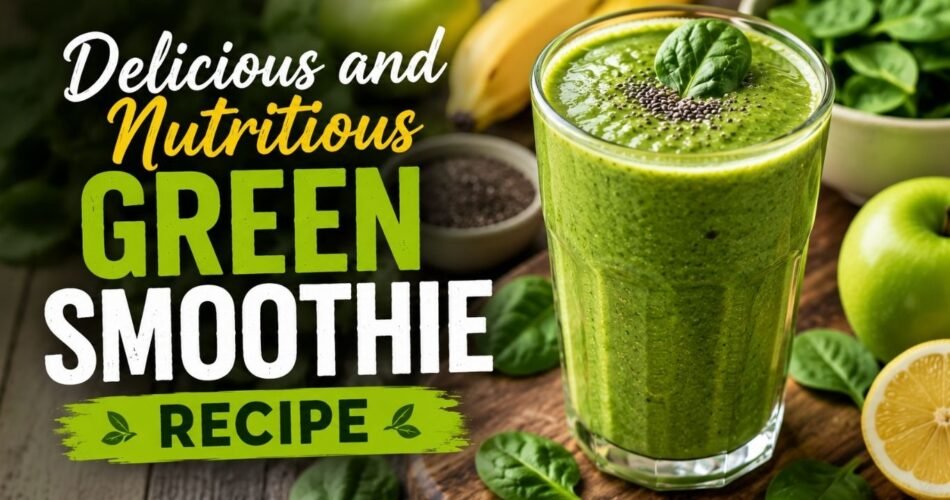
If you’ve ever stared at a glass of murky green liquid and wondered, “Do I really have to drink this?” — I get it. I was there once too. But after years of experimenting in my kitchen, I finally cracked the code on a green smoothie that doesn’t taste like a lawn mower bag. This recipe is creamy, slightly sweet, refreshing, and packed with nutrients your body genuinely craves.
Whether you’re trying to sneak more greens into your morning routine, recover after a workout, or simply feel a little better by noon, this smoothie has you covered. It takes under five minutes, requires no fancy equipment, and uses ingredients you probably already have sitting in your fridge or freezer.
Let me walk you through everything — ingredients, tips, variations, and the honest truth about why this smoothie has become a non-negotiable part of my mornings.
Why You’ll Love This Green Smoothie
There are hundreds of green smoothie recipes floating around the internet. So why is this one worth your time?
Here’s the honest answer:
- It actually tastes good. The banana and mango balance the bitterness of the greens perfectly.
- It’s ready in under 5 minutes — no chopping, no cooking, no mess.
- It keeps you full for hours thanks to fiber, healthy fats, and protein.
- It’s completely customizable for whatever you have on hand.
- Kids and smoothie-skeptic partners have approved it in my house (that’s saying something).
This isn’t a recipe designed to impress a nutritionist on paper. It’s designed to be something you’ll actually make again tomorrow.
Ingredients
Here’s everything you’ll need to make one large serving or two smaller ones.
Base Ingredients
| Ingredient | Amount | Notes |
|---|---|---|
| Fresh spinach | 2 large handfuls (~2 cups) | Baby spinach works best — mild flavor |
| Frozen banana | 1 medium | Adds creaminess and natural sweetness |
| Frozen mango chunks | ½ cup | Balances bitterness from greens |
| Unsweetened almond milk | 1 cup | Or any milk of your choice |
| Greek yogurt | ¼ cup | Adds protein and a creamy texture |
| Fresh lemon juice | 1 tablespoon | Brightens the whole flavor |
| Chia seeds | 1 teaspoon | Adds fiber and omega-3s |
| Fresh ginger | ½ inch piece | Optional but highly recommended |
Optional Add-Ins
- 1 tablespoon almond butter (extra protein and healthy fats)
- ½ teaspoon spirulina (intense nutrient boost)
- 1 tablespoon honey or maple syrup (if you want extra sweetness)
- A few ice cubes (if not using frozen fruit)
Smart Substitutions
Don’t have spinach? Kale works great — just use slightly less since it’s stronger in flavor. Romaine lettuce is another mild option that blends almost invisibly.
No almond milk? Use oat milk, coconut milk, regular dairy milk, or even just water if you’re watching calories. Each one slightly changes the flavor and texture.
Can’t do Greek yogurt? Swap in a scoop of vanilla protein powder, silken tofu, or just skip it entirely and add an extra half banana for creaminess.
No frozen banana? Use a fresh banana plus a handful of ice cubes. The texture won’t be quite as thick, but it still works well.
Mango not your thing? Frozen pineapple is an excellent swap. It adds that same tropical sweetness and works beautifully with leafy greens.
Prep Time & Servings
- Prep Time: 3–5 minutes
- Blend Time: 60–90 seconds
- Total Time: Under 5 minutes
- Servings: 1 large (about 16 oz) or 2 small
- Difficulty: Beginner-friendly
Step-by-Step Instructions
Step 1: Gather Your Ingredients
Before turning on your blender, have everything ready on the counter. Measure out your milk, pull the frozen fruit from the freezer, grab your spinach, and peel your ginger. This takes 90 seconds and makes the actual blending process seamless.
If you’re using fresh banana, slice it into rounds. If you’re using a large piece of ginger, peel and slice it thinly so it blends more easily.
Step 2: Add the Liquid First — This Step Actually Matters
Pour your almond milk into the blender before anything else goes in.
I know this sounds like a minor detail, but it genuinely affects the result. Liquid at the bottom creates the initial fluid motion that the blades need to move. Without it, frozen fruit sits directly on the blades and the motor strains, the blend is uneven, and you end up with chunks.
Starting with liquid every single time = smoother smoothie, happier blender.
Step 3: Add the Greens
Add your spinach directly on top of the liquid.
Placing greens before the frozen fruit gives them the best chance of being fully broken down. If you bury them under heavy frozen chunks, they tend to swirl around without getting properly blended — leaving you with little green flecks throughout your smoothie.
Pack the spinach in loosely. Two cups sounds like a lot but it wilts down significantly and blends to almost nothing in terms of volume and flavor.
Step 4: Add the Frozen Fruit and Remaining Ingredients
Now add your frozen banana, frozen mango, Greek yogurt, lemon juice, peeled ginger, and chia seeds.
If you’re using any optional add-ins — almond butter, protein powder, honey, spirulina — add them now too.
One note on layering: Put heavier items (like yogurt and nut butter) closer to the blade side, and lighter frozen items on top. This helps everything pull down toward the blades more efficiently during blending.
Step 5: Blend — Start Low, Finish High
Put the lid on firmly. Start blending on a low speed setting for about 15 seconds. This initial lower speed draws the ingredients down toward the blades and breaks up the larger frozen pieces before you hit full power.
Then switch to high speed and blend for 45–60 seconds until completely smooth.
How do you know it’s done? The sound changes. When you first blend frozen fruit, the motor sounds heavy and grinding. Once everything is properly broken down and fully combined, the motor sound becomes lighter and more consistent. That’s your signal.
If you hear the blender struggling at any point, stop, remove the lid, and use a spoon or spatula to push ingredients back down toward the blades. Add a small splash more liquid if needed and blend again.
Step 6: Check the Consistency
Every blender is different, and the exact thickness of your smoothie will depend on how frozen your fruit was, your specific blender power, and your liquid amount.
Too thick? Add milk or water, one tablespoon at a time, and pulse until you reach the texture you want.
Too thin? Add a few ice cubes or a small amount of additional frozen fruit and blend briefly again.
The ideal texture is pourable but thick — similar to a melted milkshake. It should coat a spoon slightly rather than run off it like water.
Step 7: Taste Before You Pour
This step gets skipped more often than it should.
Before pouring into your glass, dip a clean spoon in and taste. Ask yourself:
- Is it sweet enough? If not, add a drizzle of honey or a few more frozen mango pieces.
- Does it have a slight bitter edge? That usually means more fruit or a squeeze more lemon will fix it.
- Is the ginger too strong or not noticeable enough? Adjust based on your preference.
- Does it taste flat? A tiny pinch of salt and an extra squeeze of lemon can wake up the entire flavor profile.
Adjusting takes 30 extra seconds but makes the difference between a smoothie you finish enthusiastically and one you choke down because you feel like you should.
Step 8: Pour and Drink
Pour into a glass and drink immediately for the best experience.
Green smoothies are at their peak right after blending — coldest, creamiest, most vibrant in color and flavor. They also have the highest nutrient availability when fresh, before oxidation starts to degrade certain vitamins.
If you’re making this as a smoothie bowl, pour into a wide bowl and add your toppings now (see serving suggestions below).
Health Benefits of This Green Smoothie
This isn’t just a pretty drink. Here’s what’s actually happening nutritionally when you blend these ingredients together.
Spinach: The Quiet Overachiever
Spinach is one of the most nutrient-dense foods on the planet, yet it has one of the mildest flavors of any leafy green. Two cups deliver a serious dose of iron, magnesium, vitamin K, vitamin A, and folate — all for roughly 14 calories. It’s also high in antioxidants like lutein and zeaxanthin, which support eye health.
Banana: More Than Just Sweetness
Frozen banana gives this smoothie its creamy milkshake-like texture. But beyond that, bananas are rich in potassium (essential for heart and muscle function), vitamin B6, and resistant starch — a type of fiber that feeds beneficial gut bacteria.
Mango: Tropical and Packed With Vitamin C
Half a cup of frozen mango provides nearly 35% of your daily vitamin C needs. Vitamin C isn’t just for fighting colds — it plays a critical role in collagen production, iron absorption, and immune function. Mango also contains mangiferin, a plant compound with anti-inflammatory properties.
Ginger: The Underrated Addition
Fresh ginger adds a subtle warmth to the smoothie that most people can’t quite place but immediately love. Ginger contains gingerols and shogaols — compounds shown to reduce inflammation, ease nausea, support digestion, and may help reduce muscle soreness after exercise.
Chia Seeds: Tiny but Mighty
One teaspoon of chia seeds adds about 2 grams of fiber, a small but meaningful amount of plant-based omega-3 fatty acids, calcium, and protein. They also absorb liquid and help keep you full longer, which makes this smoothie genuinely satisfying rather than just temporarily filling.
Greek Yogurt: Protein and Gut Health
Greek yogurt contributes live cultures (probiotics) that support a healthy gut microbiome. It also bumps up the protein content significantly, which slows digestion and helps stabilize blood sugar — meaning you won’t crash an hour after drinking this.
Lemon Juice: The Flavor Enhancer You Didn’t Know You Needed
A tablespoon of fresh lemon juice does two things: it cuts through any bitterness from the greens and brightens the overall flavor of the whole smoothie. It also adds a small amount of vitamin C and helps slow oxidation, keeping your smoothie greener and fresher for longer.
Expert Tips for the Best Green Smoothie
After making green smoothies more times than I can count, here are the tips that actually make a difference:
Freeze your bananas ahead of time. Peel ripe bananas, break them into chunks, and keep a bag in the freezer. Ripe bananas are sweeter, and the frozen texture creates a much creamier smoothie than using ice.
Don’t skimp on liquid at the start. If your blender struggles, it’s almost always a liquid issue. Add your milk first, always.
Use baby spinach for beginners. Mature spinach has a slightly more intense flavor. Baby spinach is milder and blends almost invisibly — you get all the nutrition without any “green” taste.
Blend longer than you think you need to. That extra 20–30 seconds at high speed is what separates a slightly gritty smoothie from a genuinely smooth one.
Chill your glass in the freezer for 5 minutes before pouring. This keeps your smoothie colder longer — especially nice on hot mornings.
Balance is everything. If your smoothie tastes too earthy or bitter, it usually means you need more fruit or a squeeze more lemon. Taste as you go.
Add protein powder last. If you’re adding protein powder, add it after everything else is already blended, then pulse a few more times. This prevents clumping.
Variations to Try
Once you’ve nailed the base recipe, here are some delicious directions to take it.
Tropical Green Smoothie
Replace mango with pineapple, add ½ cup coconut milk, and swap ginger for a pinch of turmeric. Finish with a squeeze of lime instead of lemon. Tastes like a vacation.
Berry Green Smoothie
Add ½ cup mixed frozen berries (blueberries, strawberries, raspberries) along with the mango. The berries add antioxidants and create a purple-green color that surprisingly tastes fantastic.
High-Protein Green Smoothie
Add one scoop of vanilla protein powder and a tablespoon of almond butter. This version works great as a post-workout meal replacement.
Green Detox Smoothie
Add half a cucumber, a small handful of fresh mint, the juice of half a lime, and swap almond milk for coconut water. Light, hydrating, and incredibly refreshing.
Kid-Friendly Green Smoothie
Use more banana and mango, reduce the spinach to one small handful, and blend with apple juice instead of almond milk. The green color actually becomes a selling point with kids — call it “Hulk juice” and watch it disappear.
If you’re looking for more inspiration beyond this recipe, check out these 5 Super Green Smoothie Recipes for Weight Loss — they’re packed with smart, slimming combinations that don’t sacrifice flavor for nutrition.
Storage Tips
Best consumed fresh. Green smoothies oxidize quickly once blended, which affects both color and some nutrient content. Drink within 15–20 minutes of making it for the best experience.
Short-term refrigeration: Store in an airtight mason jar filled to the very top (minimal air exposure) for up to 24 hours. Shake or stir before drinking — some separation is completely normal.
Freezer storage: Pour into ice cube trays and freeze. Once frozen, transfer to a zip-lock bag. When you want a smoothie, blend the frozen cubes with a splash of fresh milk. Works surprisingly well and makes busy mornings even faster.
Meal prep tip: Pre-portion all your smoothie ingredients (except liquid) into individual freezer bags. Each morning, just dump one bag into the blender, add milk, and blend. You’ve essentially done all the work in one weekly prep session.
Frequently Asked Questions
1. Will I actually taste the spinach in this smoothie?
Honestly, no — not much. Spinach has one of the mildest flavors of any leafy green. When blended with banana and mango, the fruit completely dominates the flavor profile. What you’ll taste is sweet, tropical, and slightly tangy from the lemon. The green color might fool your brain into expecting something grassy, but your taste buds will be pleasantly surprised.
2. Can I use kale instead of spinach?
Yes, absolutely. Kale is nutritionally incredible — actually higher in certain vitamins than spinach. But it has a stronger, slightly more bitter flavor, and tougher leaves that require a good blender to fully break down. If you’re switching to kale, start with one handful and increase from there. Adding extra banana or mango helps offset kale’s natural bitterness.
3. Is this smoothie good for weight loss?
It can be a smart part of a weight loss approach. It’s relatively high in fiber and protein (thanks to the Greek yogurt and chia seeds), which helps control hunger and prevents overeating later in the day. The natural sugars from fruit are balanced by fiber, which slows their absorption. That said, portions matter — if you’re specifically focused on weight management, watch your total calorie intake and consider reducing or eliminating the honey add-in.
4. Can I make this smoothie without a high-powered blender?
Yes, but with a few adjustments. Let frozen ingredients sit out for 5–10 minutes to soften slightly before blending. Use less frozen fruit and more fresh. Blend in stages — blend the liquid and spinach first until smooth, then add the fruit. A regular blender might leave the smoothie slightly less silky, but it will still taste great.
5. How do I keep my green smoothie from turning brown?
Two things help most: the lemon juice (the vitamin C and acidity slow oxidation) and minimizing air exposure in storage. Always fill your storage jar completely to the top to reduce the air space above the liquid. Drink within 24 hours. Even so, some color change is natural and doesn’t mean the smoothie has gone bad.
6. Is it okay to drink a green smoothie every day?
For most healthy people, yes — this is a great daily habit. However, if you have certain health conditions (like kidney disease, where high potassium or oxalate intake needs to be managed, or thyroid issues that some suggest may be affected by large amounts of raw cruciferous greens), check with your doctor first. Rotating between different greens — spinach one day, romaine another, kale occasionally — is also a good idea to vary your nutrient intake.
7. Can I add protein powder to this smoothie?
Absolutely, and it works really well. Vanilla protein powder is the best match for this flavor profile. Add one scoop after everything else is blended, then pulse a few more times. This version becomes a complete meal replacement with 25–30g of protein per serving, which is excellent for post-workout recovery or busy mornings when you need sustained energy.
Conclusion
A great green smoothie doesn’t require exotic ingredients, expensive supplements, or 30 minutes of your morning. It just requires a solid base recipe, a willingness to experiment, and the understanding that “healthy” and “delicious” are not mutually exclusive.
This recipe has genuinely changed how I start my mornings. On days when I skip it, I notice the difference — not in some dramatic, life-changing way, but in smaller, quieter ways. I reach for less coffee. I feel less sluggish by mid-morning. My digestion feels better. Those small things add up over time.
Start with the base recipe exactly as written. Once you’ve made it two or three times and it feels natural, start experimenting with the variations. Play with different greens, swap the fruit, add a boost here and there. Make it yours.
The best green smoothie is the one you’ll actually make tomorrow morning. This is that smoothie.