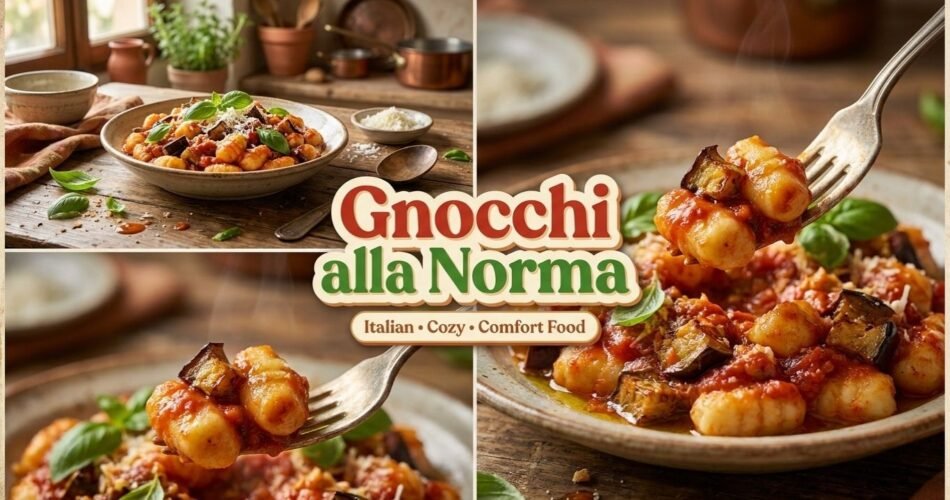
The first time I made Gnocchi alla Norma, I completely butchered the eggplant. Threw it straight into the sauce, undrained, and ended up with something that looked like a gray, watery swamp. Tasted about as good as it looked.
The second time? Completely different dish. And that one small change — cooking the eggplant properly before it ever touches the sauce — is the difference between mediocre and genuinely great.
This Gnocchi alla Norma recipe takes everything that makes the classic Sicilian pasta dish so iconic and translates it to soft, pillowy gnocchi. You get the silky roasted eggplant, that deep, almost jammy tomato sauce, and the salty, crumbly bite of ricotta salata all in one bowl.
It’s done in about 40 minutes. It’s vegetarian. And it absolutely wrecks any pasta dish you’ll order at a mid-range Italian restaurant.
Perfect for weeknight dinners when you want something that feels special. Great for guests who don’t eat meat. Honestly, just a solid Tuesday.
Why This Gnocchi alla Norma Recipe Actually Works
1. The Eggplant Gets Cooked Separately — No Exceptions
This is the one thing most home cooks skip, and it tanks the whole dish. Raw eggplant tossed straight into tomato sauce steams instead of browns. It turns gray, it leaches water into your sauce, and the texture goes completely soft in all the wrong ways.
Cook it hot and separately — in a skillet or roasted in the oven — and you get caramelized, golden edges with a tender interior. That textural contrast is everything.
2. Quality Tomatoes Do the Heavy Lifting
San Marzano tomatoes have lower acidity and a natural sweetness that means your sauce tastes developed and complex after just 10–12 minutes on the heat. Use bargain canned tomatoes and you’ll spend twice as long trying to coax the same result out of them. This is not the place to cut corners.
3. The Gnocchi Finishes In the Sauce
This is a technique borrowed from every good Italian kitchen: don’t plate the gnocchi and spoon sauce on top. Transfer the cooked gnocchi directly into the hot sauce and let everything cook together for 60–90 seconds. The gnocchi absorbs flavor. The starchy pasta water that clings to them helps the sauce bind and coat each piece properly.
4. Garlic Goes In Low and Slow (Sort Of)
Not low-and-slow like a braise — but you’re watching it carefully over medium heat, not cranking the burner and walking away. Thirty seconds too long and that sharp, almost floral garlic smell crosses into acrid bitterness that you can’t fix once it’s in the sauce. Watch it like it owes you money.
5. Ricotta Salata Is Non-Negotiable
I’ve tried this dish with Parmesan, with fresh ricotta, with mozzarella. They’re all fine. But ricotta salata — the firm, pressed, lightly salty aged version — hits different. It doesn’t melt into the sauce. It crumbles on top, provides pockets of saltiness, and has this slightly milky, almost chalky quality that cuts through the richness in a way nothing else does. Find it. It’s worth the extra grocery trip.
Key Ingredients & Smart Substitutions
Potato Gnocchi — Store-bought works perfectly here and saves real time. Look for vacuum-packed gnocchi, not refrigerated, which tends to get sticky. For gluten-free, most potato gnocchi brands are naturally GF — just double-check the label.
Eggplant — Globe or Italian eggplant both work. Aim for firm, shiny skin with no soft spots. Smaller eggplants tend to have fewer seeds and less bitterness.
Canned San Marzano Tomatoes — Whole tomatoes you crush by hand give the best texture. Regular whole plum tomatoes are a solid substitute. Avoid pre-seasoned tomato sauces — you want control over the flavor.
Fresh Garlic — Only fresh here. Pre-minced jarred garlic has a sulphur-y flatness that really shows up in a simple sauce like this.
Extra-Virgin Olive Oil — Used generously and for good reason. This is a Sicilian recipe. Olive oil isn’t a cooking medium here — it’s an ingredient.
Ricotta Salata — If you genuinely can’t find it, a young dry pecorino works. Rinsed dry feta in a pinch. Don’t use regular soft ricotta — it’ll make everything heavy and wet.
Fresh Basil — Added off the heat only. Heat destroys the volatile oils that give basil its flavor. Stir it in right before plating.
Red Pepper Flakes — Optional but traditional. Just a pinch adds a gentle background heat that balances the sweetness of the tomatoes.
How to Make Gnocchi alla Norma
Step 1: Salt and Prep the Eggplant
Cut the eggplant into ¾-inch cubes. Spread on a clean kitchen towel or paper towels, sprinkle with a pinch of salt, and let sit for 15–20 minutes. Pat completely dry before cooking.
What to look for: The towel will pull visible moisture out of the eggplant. This is exactly what you want — drier eggplant browns instead of steams.
Common mistake: Skipping this step because you’re in a hurry. If you do skip it, at least pat the cubes dry with paper towels and make sure your oil is properly hot before the eggplant goes in.
Chef’s Note: Salting modern eggplant isn’t strictly about bitterness anymore — varieties have been bred to be less bitter than they were decades ago. It’s about moisture control. Don’t skip it.
Step 2: Cook the Eggplant Until Deeply Golden
Heat 3 tablespoons of olive oil in a large, heavy skillet — cast iron is ideal — over medium-high heat until the oil shimmers and a cube of eggplant dropped in sizzles immediately.
Add eggplant in a single layer. Don’t stir. Leave it alone for 3–4 minutes until the bottom is properly golden-brown, then flip and cook another 3–4 minutes.
What to look for: Deep golden-brown edges. Not pale yellow. Not gray. You want color and a slight firmness so the cubes hold their shape in the sauce.
Common mistake: Overcrowding the pan. If all the eggplant can’t fit in one layer, cook it in two batches. Crowded eggplant steams in its own moisture and turns mushy. Two batches takes 8 extra minutes and is completely worth it.
Remove eggplant from the pan and set aside.
Chef’s Note: Some home cooks roast the eggplant in the oven at 425°F (220°C) with a drizzle of olive oil for 20–25 minutes instead. Both methods work — the oven version is more hands-off, the skillet version gives you slightly better caramelization.
Step 3: Build the Tomato Sauce
Turn the heat down to medium. Add another splash of olive oil to the same pan — don’t wipe it out. Those dark bits on the bottom from the eggplant? Pure flavor.
Add the sliced garlic and red pepper flakes. The moment the garlic hits the oil, you’ll smell that sharp, almost peppery bloom. Keep it moving gently. After about 60 seconds, when the edges are just barely turning golden, pour in the crushed tomatoes.
Season with salt. Let the sauce simmer uncovered for 10–12 minutes, stirring occasionally, until it’s thickened and looks glossy and deeply red.
What to look for: The sauce should coat the back of a spoon without running off immediately. If it’s still thin and watery at 12 minutes, give it another 3–5.
Common mistake: Cranking the heat to speed up the simmer. High heat makes the sauce spit, reduces unevenly, and can scorch on the bottom. Medium, steady, patient.
Step 4: Reunite the Eggplant with the Sauce
Add the cooked eggplant back into the tomato sauce. Stir gently — you want the eggplant to stay in distinct pieces, not break down into a chunky purée. Taste the sauce now and adjust salt.
Keep everything warm on the lowest heat setting while you cook the gnocchi.
Chef’s Note: This is a good time to add a small handful of torn basil directly into the sauce if you want that flavor baked in. Save a few fresh leaves for the top.
Step 5: Cook the Gnocchi
Bring a large pot of water to a rolling boil. Salt it generously — it should taste like the sea. Add the gnocchi all at once.
They’ll sink to the bottom, then float. Once they’ve been floating for about 30 seconds, they’re done. Use a slotted spoon or spider strainer to transfer them straight into the sauce — don’t drain them through a colander.
What to look for: Gnocchi that are floating and have slightly puffed up. They cook fast — 2 to 3 minutes total.
Common mistake: Boiling the gnocchi for too long “just to be safe.” Overcooked gnocchi turns gluey and falls apart when you toss it. The float is your timer.
Step 6: Finish in the Pan and Serve
Add the gnocchi to the sauce and toss everything together over medium heat for 60–90 seconds. You’ll see the sauce tighten up around each piece of gnocchi and everything start to look cohesive.
Take the pan off the heat. Tear in the fresh basil and give it one last gentle stir.
Spoon into bowls. Crumble a generous amount of ricotta salata on top. Drizzle with your best olive oil. Add a tiny pinch of lemon zest if you want that little brightness that makes everything pop.
Eat immediately. This one doesn’t wait.
Troubleshooting & FAQs
Q: My eggplant soaked up all the oil and the pan went dry — should I keep adding more?
No. This is completely normal and it’s a trap. Eggplant acts like a sponge at first, then releases the oil back as it breaks down. Keep the heat where it is and wait it out. If you keep adding oil, you’ll end up with something greasy and heavy.
Q: The sauce tastes too acidic — what do I do?
A pinch of sugar (¼ teaspoon) or a small knob of unsalted butter stirred in at the end softens the sharpness without making the sauce taste sweet. Also check your tomatoes — bargain brands tend to run more acidic than quality San Marzanos.
Q: Can I make this vegan?
Yes, easily. The dish itself is already vegan without the ricotta salata. For topping, try toasted breadcrumbs fried in olive oil with a pinch of salt and lemon zest — they add a crunch and saltiness that plays a similar role.
Q: Can I use fresh tomatoes instead of canned?
Only in peak summer when tomatoes are actually at their best. Use about 1.5 lbs (680g) of ripe plum tomatoes, blanch them for 30 seconds, peel, and crush by hand. Any other time of year, quality canned tomatoes genuinely beat fresh.
Storage, Reheating & Meal Prep
Refrigerator: Store leftovers in an airtight container for up to 3 days. The gnocchi will continue to absorb the sauce as they sit — the second-day version is honestly excellent.
Freezer: Skip freezing the assembled dish. Gnocchi texture suffers badly after freezing and thawing. If you want to get ahead, freeze the tomato-eggplant sauce on its own (up to 3 months in a freezer-safe container) and cook fresh gnocchi when you’re ready. That 3-minute cook time means dinner is still on the table fast.
Reheating: Add leftovers to a pan with a splash of water or vegetable broth. Reheat over medium-low, stirring gently, until warmed through. The liquid loosens the sauce back up. Microwave works too — cover with a damp paper towel and heat in 60-second bursts, stirring between each.
Meal Prep Tip: Make the sauce up to 3 days ahead and refrigerate it. When dinner time comes, just reheat the sauce and cook the gnocchi fresh. Start to finish, you’re eating in under 10 minutes.
Read — Lemon Blueberry Bars Recipe
Read — Best Banana Muffin Recipes
Read — Strawberry Oatmeal Breakfast Bars
Read — Perfect Panna Cotta Recipe