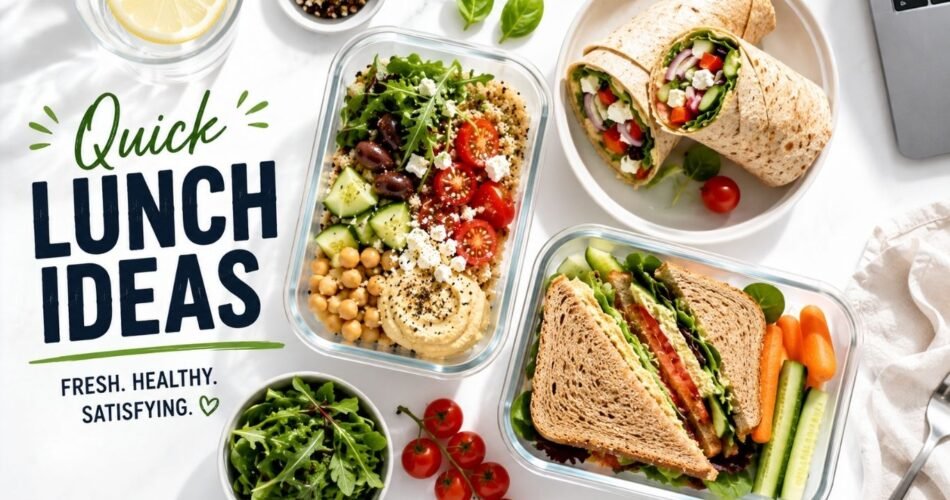
Let’s be honest lunch Recipes is probably the meal we think about least but need the most. It sits right in the middle of our day, fueling whatever comes next, whether that’s afternoon meetings, errands, or finally tackling that project you’ve been avoiding. Yet somehow, lunch often becomes an afterthought. We grab whatever’s fastest, eat at our desks without really tasting anything, or worse, skip it entirely because we’re “too busy.”
I’ve been there more times than I can count. Standing in front of the fridge at 12:30, already starving, staring at random ingredients that don’t seem to form anything resembling a meal. Or packing the same boring sandwich for the fourth day in a row because I ran out of ideas on Tuesday.
Here’s what I’ve learned: quick lunches don’t have to be sad lunches. With a handful of go-to ideas and a slightly smarter approach, you can eat well during the week without spending your entire Sunday prepping containers or your lunch break waiting in line somewhere.
Why Lunch Recipes Matters More Than We Think
When you’re slammed with work or juggling tasks at home, skipping lunch or grabbing whatever’s convenient feels productive in the moment. But that 2 PM energy crash? The snack drawer raid at 3:30? That’s your body telling you lunch actually mattered.
A proper midday meal—even a quick one—keeps your energy steady, helps you focus, and honestly just makes the rest of the day more bearable. It doesn’t need to be elaborate. It just needs to happen, and it needs to include some protein, fiber, and enough flavor that you’re not immediately fantasizing about what you’ll eat when you get home.
The trick is having a few reliable options that come together fast, use ingredients you probably already have, and don’t require you to be a meal prep wizard.
The Building Block Approach
Before we get into specific recipes, let me share the strategy that changed my lunch game: think in components, not complete meals.
Instead of planning “Turkey Sandwich Monday, Salad Tuesday,” stock your kitchen with versatile building blocks. Cooked grains, rotisserie chicken, canned beans, fresh veggies, good bread, and a couple of sauces you actually like. From these basics, you can throw together completely different lunches all week without following a single recipe.
This approach also solves the biggest lunch mistake I see people make: rigidity. When you plan five specific meals and life gets chaotic (it will), the whole system falls apart. But when you have flexible components ready? You adapt.
Quick Lunch Ideas That Actually Work
The Grain Bowl That Fixes Everything
This is my default when I want something filling but fresh. Start with any cooked grain—quinoa, rice, farro, even leftover pasta works. Add protein (canned chickpeas, shredded chicken, a fried egg, whatever), pile on raw or roasted vegetables, and finish with a generous drizzle of something flavorful.
The “something flavorful” matters. This is not the time for sad, naked vegetables. I usually go with tahini thinned with lemon juice and water, or a quick mix of olive oil, vinegar, and whatever herbs are lurking in my fridge. Hot sauce works too. The point is making sure every bite tastes good, not virtuous.
What makes this quick: If you batch-cook grains at the start of the week (20 minutes, mostly hands-off), assembly takes about five minutes. You can also pack the components separately and mix them at work so nothing gets soggy.
Swaps that work: Swap grains for mixed greens if you want it lighter. Use any protein—this week I’ve done white beans, leftover salmon, and scrambled tofu in the same basic format. Change your vegetables based on what needs using up.
The Fancy-ish Wrap
Wraps get a bad reputation because we’ve all had too many boring ones, but a good wrap is legitimately satisfying and travels beautifully.
Here’s my go-to: spread hummus (or mashed avocado, or cream cheese) on a large tortilla. Layer on your protein—I like rotisserie chicken, but leftover steak, canned tuna, or falafel from the freezer section all work. Add crunch with shredded cabbage or lettuce, throw in something pickled (peppers, cucumbers, whatever), maybe some cheese if you’re feeling it, and roll it up tight.
The key is the spread. It acts as a moisture barrier so your wrap doesn’t turn into a soggy mess by lunchtime, plus it adds flavor and helps everything stick together.
Time-saver: Make two. Seriously. Wraps keep well for a day, and once you’ve got everything out, making a second one takes thirty extra seconds but gives you tomorrow’s lunch.
Mix it up: Try a Mediterranean version with cucumber, tomatoes, feta, and tzatziki. Or go southwest with black beans, corn, salsa, and cheese. The formula stays the same, but the flavors shift completely.
The “Nicer Than It Looks” Pasta Situation
Cold pasta salads often fall flat, but warm or room-temperature pasta with minimal ingredients? That’s where it’s at.
Cook any short pasta. While it’s still warm, toss it with olive oil, a can of drained tuna or white beans, halved cherry tomatoes, and a handful of arugula or spinach (the heat will wilt it slightly). Season aggressively with salt, pepper, and red pepper flakes. That’s it.
It sounds too simple to be good, but the warmth of the pasta brings everything together, the tomatoes get slightly jammy, and you end up with something that tastes like you tried much harder than you did.
Make it work for you: Not into tuna? Use diced mozzarella and fresh basil. Want more vegetables? Throw in frozen peas during the last minute of pasta cooking. Need it more substantial? Add a fried egg on top.
Packing tip: This actually tastes great at room temperature, which makes it ideal for days when reheating isn’t convenient. Pack it in the morning and eat it whenever.
The Salad That Doesn’t Suck
Most lunch salads fail because they’re either boring or poorly constructed. A good workday salad needs texture, substance, and a dressing you’d actually want to eat.
Start with hearty greens—not just plain lettuce. Mix in kale, arugula, or spinach. Add something substantial like roasted sweet potato, crispy chickpeas, or grilled chicken. Include crunch (nuts, seeds, croutons). Throw in a few fresh elements like cucumber or apple. Add something rich like avocado or cheese.
The dressing makes or breaks this. I keep a jar of my favorite vinaigrette at work because those little packets are universally disappointing. If you’re packing this for work, dress it right before eating or pack dressing separately.
Avoid the mistake: Don’t add wet ingredients (like tomatoes) unless you’re eating it within a couple hours. They’ll make everything soggy. Pack them separately if possible.
If you’re already thinking about meal prep strategies, there’s a helpful guide on healthy meal prep ideas for the week that covers batch cooking these components efficiently.
The Soup + Something Formula
A good soup is incredibly satisfying for lunch, but on its own, it often leaves you hungry an hour later. Pair it with something—good bread, crackers with cheese, half a sandwich—and you’ve got a complete meal.
I keep shelf-stable soups at work for emergencies, but homemade soup is one of the best things to batch-cook on Sunday. It reheats perfectly, travels well in a thermos, and you can pack the “something” separately so it stays crispy.
Quick version: When I don’t have homemade soup, I’ll sometimes just heat up quality chicken or vegetable broth, add whatever leftover vegetables and protein I have, maybe some cooked noodles or rice, and call it impromptu soup. It’s done in ten minutes and uses up odds and ends.
The Breakfast-for-Lunch Move
Sometimes you just want something warm and comforting, and that’s where breakfast foods come in. A veggie-loaded frittata, avocado toast with a jammy egg, or even leftover pancakes with nut butter and fruit hit differently at lunchtime.
Frittatas are especially great because you can make one ahead, slice it into portions, and grab a piece each day. Eggs, cheese, whatever vegetables need using, baked until set. Eat it cold, warm, or room temperature.
If you made extra pancakes over the weekend (maybe from a favorite fluffy pancakes recipe), they actually make a solid lunch base with some protein and fruit on the side. Not conventional, but it works.
The Stuff Nobody Tells You
Invest in decent containers. You don’t need fancy bento boxes, but containers that don’t leak and keep food at the right temperature make everything easier. I use glass for reheating and good-quality plastic for salads and wraps.
Keep backup ingredients at work. A jar of peanut butter, a box of crackers, shelf-stable soup, maybe some nuts. For the days when you forget to pack lunch or it falls apart in your bag (it happens).
Season properly. The number one reason homemade lunches taste bland is under-seasoning. Food you’re eating cold or room temperature needs more salt, acid, and spice than you think. Taste it before you pack it and adjust.
Don’t pack foods you don’t like cold. Some things—like melted cheese or certain grains—have vastly different textures when cold. If you know you won’t have access to a microwave, plan accordingly.
Making It Sustainable
The real test of any lunch strategy isn’t whether it works for a week—it’s whether you’re still doing it a month from now. That’s why flexibility matters more than perfection.
Some weeks, I’m on top of it: grains prepped, vegetables chopped, five lunches ready to go. Other weeks, I’m grabbing a tortilla and whatever’s in the fridge on my way out the door. Both are fine. The goal is having enough basic skills and ingredients that you can pull together something decent regardless of how organized you are.
Also, give yourself permission to repeat. If you make something you really like, eat it three days in a row. There’s no rule saying lunch has to be different every day. I’d rather eat the same delicious grain bowl three times than force variety with meals I don’t enjoy.
The Bottom Line
Quick lunches aren’t about cutting corners—they’re about being realistic. You’re not going to spend an hour making lunch on a Tuesday. But you can absolutely spend ten minutes putting together something that tastes good, keeps you full, and doesn’t require a culinary degree.
Start with one or two of these ideas. Get comfortable with them. Then add another. Before long, you’ll have a rotation of reliable options and the confidence to improvise when needed.
Your lunch break might still be too short and your to-do list might still be too long, but at least you’ll be eating something worth your time. And honestly? That makes a bigger difference than you’d think.