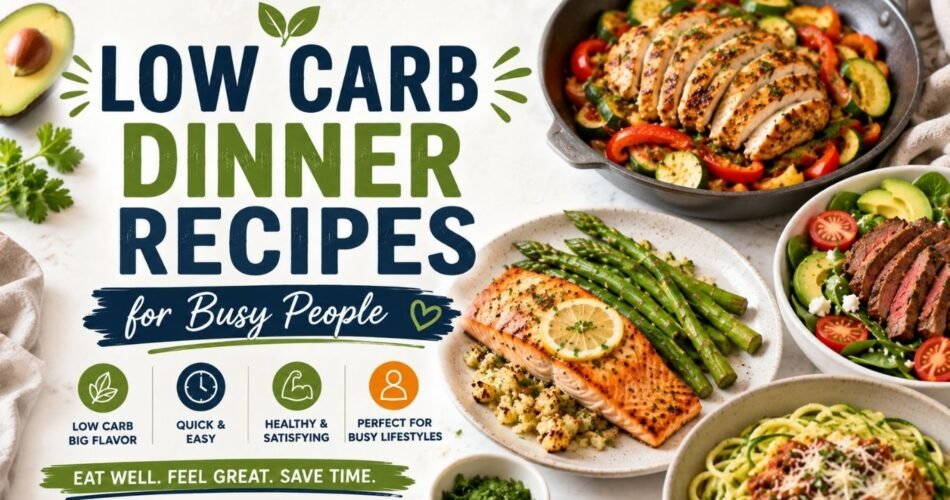
Look, I get it. You’re tired. It’s 6:30 PM on a Wednesday, and the last thing you want to do is stand in the kitchen for an hour making something “healthy” that tastes like cardboard. But you also don’t want to derail your low-carb progress with yet another takeout meal that leaves you bloated and sluggish.
Here’s the thing about cooking low-carb dinners when you’re busy: it’s actually easier than traditional cooking once you shift your mindset. No waiting for pasta water to boil. No measuring rice. No kneading dough or watching bread rise. Most low-carb dinners come together faster because you’re working with straightforward proteins and vegetables that cook quickly.
I’ve been cooking quick low-carb meals for my family for years now, and I’ve learned that the secret isn’t fancy recipes or expensive ingredients. It’s about having a few reliable strategies, knowing which shortcuts actually work, and understanding how to make food taste incredible without relying on starchy fillers.
Why Low-Carb Actually Makes Sense for Busy Schedules
When most people think “quick dinner,” they default to pasta, rice bowls, or sandwiches. These feel fast because they’re familiar. But here’s what I’ve noticed: low-carb dinners often cook in the same amount of time or faster.
A chicken breast with roasted broccoli? Twenty minutes, tops. Stir-fried shrimp with zucchini noodles? Fifteen minutes. Pan-seared salmon with a side salad? Twelve minutes if you move quickly.
The other advantage is energy. Heavy carb-loaded dinners might fill you up initially, but that post-dinner crash is real. When you eat a balanced low-carb meal with good protein, healthy fats, and fiber from vegetables, you actually stay fuller longer and avoid that 9 PM kitchen raid for snacks.
Plus, low-carb cooking simplifies meal planning. You’re basically thinking: protein + vegetables + fat + seasoning. That’s the formula. Once you internalize it, weeknight dinners become almost automatic.
The Biggest Mistakes People Make (And How to Avoid Them)
Mistake #1: Making Everything Bland
This is the number one reason people abandon low-carb cooking. They think “healthy” means boiled chicken and steamed broccoli with nothing on it. Absolutely not. Your dinner should taste amazing.
The fix? Fat carries flavor. Use butter, olive oil, avocado oil, ghee. Add fresh garlic, ginger, herbs, spices, lemon juice, vinegar, mustard, hot sauce. A simple chicken thigh cooked in butter with garlic and thyme tastes like restaurant food, not diet food.
Mistake #2: Hidden Carbs Everywhere
Salad dressings, marinades, sauces—they’re carb bombs. Even “healthy” teriyaki sauce can have 15+ grams of sugar per serving. Check labels. Make your own simple dressings with olive oil, vinegar, mustard, and herbs. It takes two minutes and tastes better anyway.
Mistake #3: Not Eating Enough
A tiny grilled chicken breast and some lettuce isn’t dinner. You’ll be starving in an hour. Low-carb meals need adequate protein and fat to satisfy you. Don’t be afraid of fattier cuts of meat, full-fat cheese, nuts, avocado, and olive oil.
Mistake #4: Overcomplicating Everything
You don’t need seventeen ingredients and five cooking techniques for a weeknight dinner. Some of the best low-carb meals have four components total. Keep it simple, especially during the week.
Essential Ingredient Swaps That Actually Work
When you’re transitioning to low-carb cooking, knowing what to substitute makes everything easier.
Instead of rice: Cauliflower rice is the obvious choice, but don’t sleep on broccoli rice (finely chopped broccoli florets) or cabbage sautéed until tender. For Asian-inspired dishes, shirataki rice works well if you prepare it properly (rinse, dry roast in a pan for a few minutes to remove excess moisture).
Instead of pasta: Zucchini noodles are great for lighter dishes. For heartier sauces, try spaghetti squash or even thinly sliced cabbage. Shirataki noodles work if you’re craving the texture of noodles in soup or stir-fries.
Instead of breadcrumbs: Crushed pork rinds, almond flour, or parmesan cheese. Honestly, the pork rind trick for coating chicken or fish is genius—it gets incredibly crispy.
Instead of flour for thickening: Use a little cream cheese, heavy cream, or xanthan gum (just a pinch). You can also reduce sauces longer to naturally thicken them.
Instead of potatoes: Roasted radishes taste shockingly similar to roasted potatoes. Cauliflower mash is obviously classic. Roasted turnips work too.
Quick Low-Carb Dinner Ideas That Work
Let me walk you through some of my actual weeknight go-to meals. These aren’t fancy, but they work.
Sheet Pan Chicken Thighs with Whatever Vegetables You Have
This is my most-cooked dinner, hands down. Pat dry 4-6 chicken thighs (bone-in, skin-on for maximum flavor and minimal effort). Season generously with salt, pepper, garlic powder, and paprika. Arrange on a sheet pan. Surround with chopped vegetables—Brussels sprouts, broccoli, bell peppers, asparagus, cherry tomatoes, whatever needs to be used up.
Drizzle everything with olive oil. Roast at 425°F for 35-40 minutes until the chicken skin is crispy and vegetables are caramelized. That’s it. One pan, minimal cleanup, and dinner’s done.
The beauty here is the variations are endless. Use different spice blends—Italian herbs, curry powder, lemon pepper, everything bagel seasoning. Change up the vegetables based on season and preference. It never gets boring.
Ten-Minute Shrimp Stir-Fry
Keep a bag of frozen shrimp in your freezer always. It’s your weeknight emergency protein.
Heat a large skillet or wok over high heat. Add a tablespoon of avocado oil. Throw in pre-rinsed shrimp (doesn’t need to be fully thawed—the high heat handles it). Cook for 2-3 minutes until pink. Remove shrimp.
Same pan, add another splash of oil. Add whatever vegetables you have—bell peppers, snap peas, mushrooms, bok choy, broccoli—cut into bite-sized pieces. Stir-fry for 3-4 minutes. Add minced garlic and ginger, cook 30 seconds until fragrant.
Return shrimp to pan. Add a sauce: soy sauce (or coconut aminos), rice vinegar, sesame oil, maybe a tiny bit of erythritol if you like sweetness, red pepper flakes for heat. Toss everything together. Done.
Serve over cauliflower rice if you want, or honestly, it’s great just as-is. Total time: 10 minutes.
Burger Bowls (Seriously Underrated)
Nobody talks about this enough, but deconstructed burgers are perfect low-carb dinners. Brown ground beef (or turkey, or chicken) in a skillet with salt and pepper. That’s your protein done in 8 minutes.
While that cooks, prep your bowl: chopped lettuce, sliced tomatoes, pickles, onions, avocado, cheese, maybe some bacon if you’re feeling it. When the meat’s done, build your bowl. Top with whatever you’d put on a burger—mustard, mayo, sugar-free ketchup, hot sauce.
This hits that fast-food craving without the actual fast food. My kids love it because they can customize their own bowls. If you’re looking for more ideas that work for the whole family without breaking the budget, these budget-friendly healthy meals are worth checking out.
Rotisserie Chicken Saves Everything
I buy a rotisserie chicken almost every week. It’s already cooked, seasoned, and costs less than raw chicken breasts. Here’s what you do with it:
Monday: Shred the chicken, toss with buffalo sauce and blue cheese, serve over a big salad with ranch dressing.
Tuesday: Make quick chicken “fried rice” with cauliflower rice, scrambled eggs, soy sauce, and whatever vegetables you have.
Wednesday: Heat the remaining chicken in a skillet with taco seasoning, serve in lettuce wraps with sour cream, cheese, salsa, and avocado.
One chicken, three different meals, zero actual cooking required.
Pan-Seared Salmon with Garlic Butter Vegetables
This sounds fancy but takes 15 minutes. Pat salmon fillets dry, season with salt and pepper. Heat a skillet with butter or oil over medium-high heat. Place salmon skin-side up, cook for 4 minutes without moving it. Flip, cook another 3-4 minutes. Remove to a plate.
Same pan, add more butter, throw in green beans (or asparagus, or broccoli), minced garlic, salt, and pepper. Sauté for 5-6 minutes until tender-crisp. Squeeze lemon over everything.
This is the kind of meal that makes you feel like you have your life together, even when you absolutely don’t.
Time-Saving Strategies That Actually Help
Pre-chop vegetables on Sunday. Even just 15 minutes of chopping bell peppers, broccoli, and onions will save you multiple times throughout the week. Store them in containers in the fridge.
Use pre-washed salad greens and pre-cut vegetables when your budget allows. Yes, they cost more. But if it’s the difference between cooking at home and ordering takeout, they’re worth it.
Invest in a meat thermometer. Stop guessing whether chicken is done. Check the temp, know it’s safe, move on with your life.
Cook proteins in batches. Grill or bake several chicken breasts or pork chops at once. Use them throughout the week in different preparations.
Keep your pantry stocked with low-carb essentials: canned tuna and salmon, jarred marinara (check for low sugar), coconut aminos, various hot sauces, nuts, olive oil, vinegars, and your favorite spices.
Frozen vegetables are your friend. They’re already prepped, they last forever, and nutritionally they’re just as good as fresh.
Simple Meal Prep Without the Overwhelm
I’m not talking about spending your entire Sunday cooking 21 meals. That’s exhausting. Here’s what actually works:
Prep one complete meal. Make a big batch of something that reheats well—chili, soup, casserole, or a sheet pan dinner. That covers 2-3 nights right there.
Prep components, not full meals. Cook a bunch of protein. Chop vegetables. Make a big salad. Mix up a dressing or two. Then during the week, you’re just assembling, not actually cooking from scratch.
Double whatever you’re making for dinner. Eating it twice doesn’t feel like meal prep, but it has the same result—less cooking during the week.
For anyone new to this whole approach, starting with clean eating recipes can help build confidence before diving into specific low-carb strategies.
Making Low-Carb Work Long-Term
The dinners I’ve shared aren’t temporary diet food. They’re just… food. Good food that happens to be lower in carbohydrates and higher in the nutrients your body actually needs.
The key to sustaining this long-term is variation and flavor. Don’t eat the same three meals on repeat. Explore different cuisines—Indian butter chicken (skip the rice), Thai curries with cauliflower rice, Italian sausage and peppers, Greek grilled chicken with tzatziki, Korean bulgogi beef lettuce wraps.
Also, be flexible. If you’re at a social event and want a small serving of someone’s homemade potato salad, have it. The point isn’t perfection; it’s consistently making choices that support your energy and health most of the time.
And if you’re specifically trying to lose weight while eating well, combining these low-carb strategies with other healthy dinner recipes focused on weight loss gives you even more variety to work with.
The Real Secret
Here’s what I’ve learned after years of making quick low-carb dinners: the secret isn’t a specific recipe or magic ingredient. It’s building confidence in the kitchen and trusting that simple food, prepared well, is always enough.
You don’t need complicated recipes or exotic ingredients. You need good protein, colorful vegetables, healthy fats, and bold flavors. Master the basics—how to properly season and cook chicken, beef, pork, and fish; how to roast vegetables so they’re caramelized and delicious; how to build a sauce from pantry staples—and you’ll never struggle with weeknight dinners again.
Low-carb cooking for busy people is about removing obstacles, not adding them. It’s about having a framework, not following rigid rules. And most importantly, it’s about eating food that actually tastes good, because life’s too short for bland chicken and steamed broccoli.
Start with one or two of these dinner ideas this week. Get comfortable with them. Then add another. Before you know it, you’ll have your own rotation of quick, satisfying, low-carb meals that work for your schedule and your taste buds.
And on those nights when even “quick” feels like too much? That’s what rotisserie chicken is for.