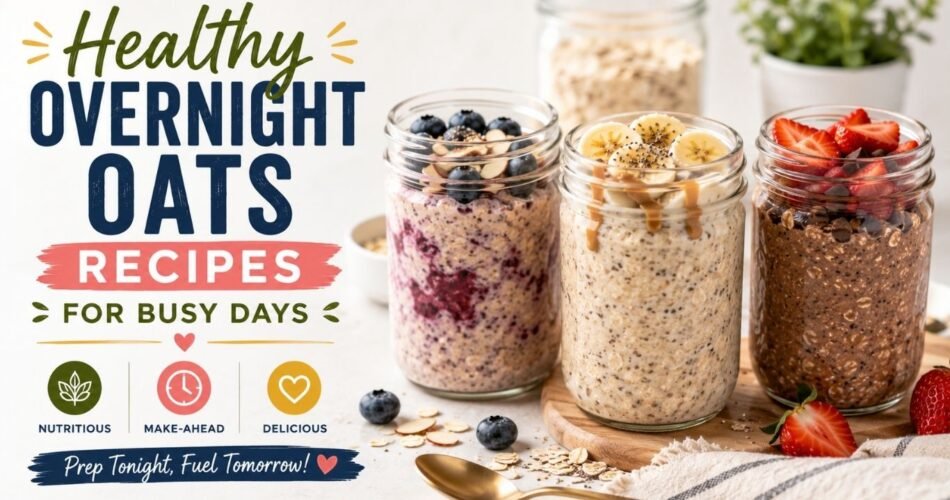
There’s this specific kind of exhaustion that hits on a Tuesday morning when you’ve already hit snooze twice, you can’t find your keys, and breakfast is somehow both urgent and completely impossible. You want something that actually fuels you, not just a granola bar grabbed on the way out the door — but you also have approximately nine minutes before things go sideways.
That’s exactly where overnight oats became a permanent fixture in my life. Not because they’re trendy (though they’ve definitely had their Instagram moment), but because they genuinely solve a real problem: breakfast is ready before you even wake up. You open the fridge, grab a jar, maybe add a few toppings, and that’s it. No cooking, no standing over a stove, no waiting. Just real food.
I’ve been making overnight oats in various forms for a few years now, and I’ve learned a lot along the way — including what makes them terrible, what makes them genuinely delicious, and how to prep multiple days’ worth without getting bored. Let’s get into all of it.
The Base Recipe: What You Actually Need
Before diving into variations, it helps to understand the foundation. Overnight oats are forgiving, but the ratios matter more than most people realize.
Basic overnight oats (1 serving):
- ½ cup rolled oats (old-fashioned oats, not instant — this is important)
- ½ to ¾ cup milk of your choice
- 2–3 tablespoons plain Greek yogurt (optional but adds creaminess and protein)
- 1 teaspoon chia seeds (thickens naturally and adds omega-3s)
- 1 teaspoon sweetener (maple syrup, honey, or none at all if your toppings are sweet)
- A pinch of salt (never skip this — it makes everything taste more balanced)
The container matters too. A wide-mouth mason jar (16 oz) is ideal because you can see the layers, stir easily, and eat directly from it. No extra bowl to wash.
Why rolled oats and not instant? Instant oats turn to mush overnight. They lose all their texture and become something strangely baby-food-like. Rolled oats soften just enough to be creamy without disintegrating. Steel-cut oats are another option if you like more bite, but they need a longer soak — at least 10–12 hours — and a slightly higher liquid ratio.
The Liquid Ratio Problem (And How to Fix It)
This is the most common frustration people have: oats that are either weirdly thick and gluey or thin and watery. Both are fixable.
Too thick: Your oats soaked up all the liquid. Add a splash of milk in the morning and stir — problem solved. This happens more with chia seeds or yogurt-heavy recipes, or if you used slightly more oats than recommended.
Too watery: You went heavy on the liquid, or your fruit released extra moisture overnight. Next time, use slightly less milk. If your oats are already watery in the morning, stir in a small spoonful of nut butter or extra yogurt to thicken things up quickly.
Bland and boring: This is almost always a seasoning issue. A pinch of salt helps, but vanilla extract (even just a quarter teaspoon) makes a surprising difference. Cinnamon is another underrated addition — it adds warmth without adding calories. And honestly, the toppings you add in the morning are where most of the flavor actually comes from.
Prep Once, Eat All Week
If you want to make overnight oats a real habit rather than an occasional thing, batch prep is the way to go. Here’s how I do it:
On Sunday evenings, I line up four or five jars on the counter and prepare the base for each one. This takes maybe 10 minutes total. I keep the bases simple and consistent, then plan different toppings for each day so nothing feels repetitive. The toppings get added in the morning — some take five seconds, others maybe a full minute if you’re slicing fruit.
Store the jars in the fridge and they’ll keep well for up to five days. After that, the texture starts to suffer and the fruit (if mixed in) gets a little too soft. For anything with banana, I’d suggest only going three days ahead and keeping the banana separate until morning.
If you’re looking for more ways to handle breakfast efficiently during the week, this guide on quick breakfast ideas for busy mornings is worth bookmarking — it covers more than just oats and gives you options when you need variety.
Flavor Variations That Actually Taste Different
Here’s where it gets fun. The base stays the same; what changes is the personality of the jar.
1. Peanut Butter Banana (The Comfort Bowl)
Stir one tablespoon of natural peanut butter directly into the oat mixture before refrigerating. In the morning, slice half a banana on top, add a light drizzle of honey, and a small sprinkle of granola if you want crunch. The peanut butter thickens the base beautifully and creates this almost dessert-like richness without any actual junk in it.
This one works especially well after morning workouts — the carbs and protein ratio is solid, and it keeps you full for hours. If you want an extra protein boost, stir in a scoop of vanilla or unflavored protein powder with the base. Just add a little extra milk since the powder absorbs liquid.
2. Berry and Lemon (The Bright One)
Add a teaspoon of lemon zest and a squeeze of fresh lemon juice to your base. Mix in a small handful of blueberries or raspberries directly — they’ll bleed slightly overnight and create this gorgeous purple-pink hue throughout the oats. Top in the morning with more fresh berries and maybe a dollop of Greek yogurt.
This variation is noticeably lighter in feel. It doesn’t have that heavy, rich quality that nut butter recipes do — it tastes fresh and almost a little tangy, which is surprisingly refreshing first thing in the morning. If fresh berries aren’t in season, frozen work just fine. Add them frozen; they thaw overnight.
3. Apple Cinnamon Pie (The Fall Classic, Year-Round)
Mix cinnamon generously into the base — I use about half a teaspoon. Add a tablespoon of unsweetened applesauce to the mixture (this adds flavor and natural sweetness without refined sugar). In the morning, dice half an apple and layer it on top with a sprinkle of more cinnamon and a few chopped walnuts.
The applesauce trick is something I stumbled onto accidentally, and it genuinely makes these taste like something warm and cozy even though they’re served cold. Walnuts add just enough fat to make the bowl feel substantial.
4. Chocolate Cherry (When You Want Dessert for Breakfast)
Add one teaspoon of cocoa powder and a teaspoon of maple syrup to the base. Stir well. Add frozen cherries directly into the jar before refrigerating. In the morning, everything has this deeply rich, dark color with a chocolate-cherry flavor that honestly feels indulgent — but it’s just oats and fruit.
A few dark chocolate chips on top won’t hurt anyone, especially on a Monday.
Ingredient Swaps Worth Knowing
Dairy-free? Any plant-based milk works. Oat milk creates the creamiest result (ironic, maybe). Coconut milk adds richness and a subtle tropical flavor that pairs well with mango or pineapple. Almond milk is lighter and doesn’t affect flavor much. Avoid using straight water — the oats will taste flat and lifeless.
Skipping yogurt? That’s fine. Replace it with a little extra chia seeds or a tablespoon of hemp seeds for similar creaminess and protein.
No maple syrup or honey? Mashed ripe banana stirred into the base adds natural sweetness and also thickens the texture. Medjool dates blended with a splash of milk make a surprisingly good sweetener paste if you want to go that route.
Adding more protein: Cottage cheese blended smooth can replace Greek yogurt completely and adds significant protein without changing the flavor much. A scoop of collagen powder dissolves easily and adds protein without texture changes. Nut butters, hemp seeds, and flaxseed are all good additions too.
If you’re building a whole breakfast-and-beyond nutrition routine, pairing overnight oats with something like a post-workout smoothie can work really well — check out these healthy smoothie recipes for weight loss for some solid options.
A Few More Tips Before You Go
Don’t add crunchy toppings the night before. Granola, nuts, and seeds get soggy overnight. Add them in the morning for texture.
Label your jars if you’re making multiple flavors for the week. Future-you will appreciate not having to guess which one is which at 7 a.m.
Eat them cold, or warm them up. Most people default to eating overnight oats straight from the fridge, but they’re actually really good warmed for 60–90 seconds in the microwave (remove the lid if it’s a jar). This is especially nice in winter when cold breakfast sounds deeply unappealing.
Travel well. If you commute, overnight oats in a jar with a lid is one of the most portable breakfasts possible. Just pack a spoon.
The Bottom Line
Overnight oats aren’t magic, but they’re close to it in terms of how much easier they make weekday mornings. Ten minutes of prep the night before genuinely changes the entire morning experience. You eat better, you feel better, and you spend less mental energy on what’s for breakfast — which sounds small until you realize how much that mental overhead adds up over a week.
Start with the basic recipe, nail your ratios, and then play with flavors until you find the combinations that actually excite you to open the fridge. That’s when the habit sticks.