Most of us have been there. You decide to eat better, you spend a Sunday afternoon cooking something bland and joyless, you eat it twice, and by Wednesday you’re ordering pizza because the whole thing just feels punishing.
That’s not a willpower problem. That’s a recipe problem.
The truth is, healthy dinners for weight loss don’t have to taste like sadness on a plate. They don’t have to be complicated, expensive, or take an hour and a half on a Tuesday evening when you’re already exhausted. What they do need to be is satisfying — real food that fills you up, keeps you from raiding the pantry at 10pm, and doesn’t make you feel like you’re on some grim deprivation program.
I’ve spent a lot of time in my own kitchen figuring out what actually works for this. Not just what sounds good on a meal plan, but what I’ll actually cook when I’m tired, busy, or completely uninspired. These 15 dinner ideas are the ones that stuck — the ones that made it into my regular rotation because they genuinely deliver on flavor while keeping things light enough to support real weight loss goals.
A Few Things Worth Knowing Before You Start
Before diving into the recipes, there are a few common mistakes people make when cooking for weight loss that are worth addressing, because they’ll quietly sabotage even your best efforts.
Underestimating calories in “healthy” cooking oils. A generous pour of olive oil over a pan adds up fast. You don’t need to skip it — fat is important and keeps you full — but measuring it rather than free-pouring makes a real difference over time.
Skipping protein. This is the big one. A salad with greens and vegetables but no real protein source will leave you hungry within two hours. Every dinner on this list has a solid protein anchor, because that’s what actually keeps you satisfied.
Making portions too small and then snacking all evening. Ironically, eating too little at dinner often leads to more total calories consumed by the end of the night. Fill your plate properly with the right foods and you’re far less likely to graze.
Boredom. Eating the same three meals on rotation is a fast track to quitting. Variety is part of the strategy, not just a nice bonus.
Okay. Let’s get into it.
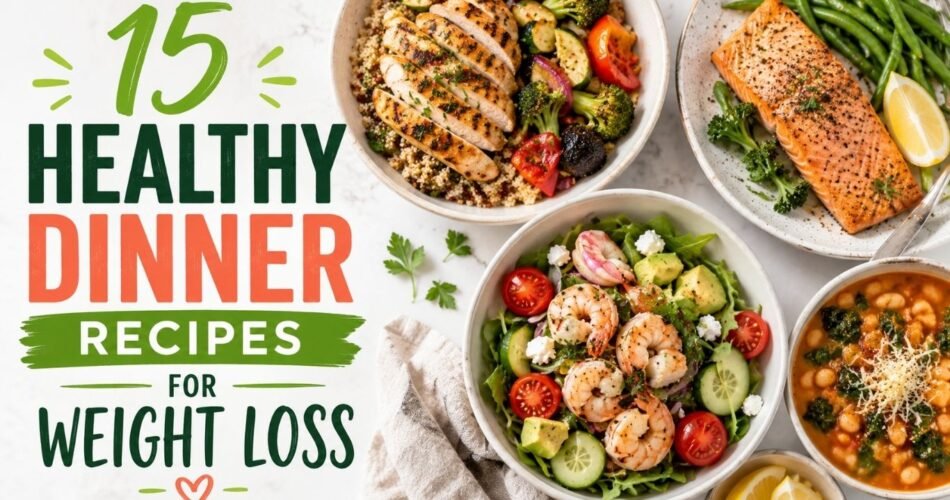
15 Healthy Dinner Recipes for Weight Loss
1. Sheet Pan Lemon Herb Chicken and Vegetables
This is the workhorse of healthy weeknight cooking, and for good reason. Toss chicken thighs or breasts with olive oil, lemon zest, garlic, dried oregano, and whatever vegetables you have — zucchini, bell peppers, cherry tomatoes, red onion — onto a sheet pan and roast at 425°F for about 25–30 minutes.
The key to making this actually taste good (and not like diet food) is seasoning aggressively and not overcrowding the pan. Overcrowding steams the vegetables instead of roasting them, and you lose that beautiful caramelized edge that makes everything taste sweeter and richer.
One pan, minimal dishes, and leftovers that work beautifully the next day for lunch.
2. Turkey and Zucchini Meatballs with Marinara
Ground turkey is leaner than beef but can taste dry and forgettable if you’re not careful. The fix? Grated zucchini mixed right into the meat. It keeps the meatballs incredibly moist, adds volume without calories, and disappears completely in texture once cooked.
Serve these over spiralized zucchini noodles or a small portion of whole wheat pasta with a simple store-bought or homemade marinara. Sprinkle with fresh basil and a little parmesan if you like — that small amount of real cheese adds a lot of satisfaction for relatively few calories.
3. One-Pot Lentil and Vegetable Soup
Lentils are one of the most underrated weight loss foods out there. They’re high in protein and fiber, incredibly filling, and cheap. A big pot of this soup will feed you for three or four days.
Start with diced onion, carrot, and celery sautéed in a little olive oil. Add garlic, cumin, smoked paprika, and a can of diced tomatoes. Stir in a cup and a half of red or green lentils and enough vegetable broth to cover generously. Simmer until soft — about 25 minutes — and finish with a squeeze of lemon juice. That acid at the end is not optional; it wakes the whole thing up.
Pair with a small piece of whole grain bread if you need something more substantial.
4. Baked Salmon with Roasted Asparagus
If you’re looking for high protein dinner recipes that feel a little more elevated, salmon is your answer. It’s rich in omega-3 fatty acids, cooks in under 20 minutes, and pairs with virtually anything.
Season a salmon fillet simply — salt, pepper, a drizzle of olive oil, a little Dijon mustard if you’re feeling it — and bake at 400°F for 12–15 minutes. Roast the asparagus alongside with garlic and lemon. Simple, beautiful, and genuinely satisfying.
Budget tip: Frozen salmon fillets are often just as good as fresh and significantly cheaper. Thaw overnight in the fridge.
5. Cauliflower Fried Rice with Egg and Edamame
This is one of those dishes where the swap feels almost too easy. Pulse cauliflower florets in a food processor until they resemble rice, then cook them in a hot wok or skillet with sesame oil, garlic, ginger, soy sauce (low sodium), scrambled eggs, and edamame.
It eats like fried rice. It satisfies that fried rice craving. And it comes in at a fraction of the calories. The edamame adds protein, the egg adds richness, and the sesame oil does more flavor work than you’d expect from just a teaspoon.
6. Grilled Chicken Taco Bowl
Skip the tortilla, keep everything else. A bowl with seasoned grilled chicken, brown rice or cauliflower rice, black beans, corn, shredded cabbage, pico de gallo, and a drizzle of Greek yogurt thinned with lime juice instead of sour cream covers almost every flavor note you want from a taco — smoky, bright, creamy, crunchy.
This is also great for meal prep. Cook the chicken and rice in bulk on Sunday and assemble fresh bowls throughout the week with the toppings you like.
7. White Bean and Kale Soup
There’s something deeply comforting about this soup that makes it feel indulgent even though it absolutely isn’t. Sauté garlic and onion, add chicken or vegetable broth, two cans of white beans (one blended smooth to thicken the base, one left whole), and a big handful of chopped kale. Season with Italian herbs, a parmesan rind if you have one, and salt and pepper.
The blended bean trick is a game changer for creating a creamy, satisfying broth without any cream at all.
8. Baked Cod with Tomato and Herb Sauce
Cod is one of the leanest proteins you can cook with, and it takes on flavor beautifully. Nestle cod fillets into a baking dish, cover with a simple sauce of canned crushed tomatoes, garlic, capers, olives, and fresh herbs, and bake at 400°F for about 20 minutes.
It looks impressive enough to serve to guests and takes about five minutes of actual effort. Serve with roasted vegetables or a simple green salad.
9. Stuffed Bell Peppers with Quinoa and Black Beans
These are endlessly customizable and genuinely filling. Mix cooked quinoa with black beans, corn, cumin-spiced tomato sauce, and whatever cheese you prefer on top. Stuff into halved bell peppers and bake until the peppers are tender and the tops are golden.
Quinoa is worth using here specifically because it’s a complete protein — all nine essential amino acids — which is relatively rare for a plant-based food. This works perfectly for vegetarian or meatless nights.
10. Thai-Inspired Chicken Lettuce Wraps
These are fast, light, and have enough going on texturally and flavor-wise that you won’t feel like you’re missing anything.
Cook ground chicken with garlic, ginger, fish sauce, a little honey, lime juice, and chili flakes. Add water chestnuts for crunch. Serve in butter lettuce leaves topped with shredded carrots, fresh mint, cilantro, and a drizzle of peanut sauce made from peanut butter, lime, soy sauce, and a splash of water.
These come together in about 15 minutes. If you want to explore more quick, high-protein options on busy nights, these high-protein meals ready in 30 minutes are worth bookmarking alongside this one.
11. Zucchini and Chickpea Stir Fry with Brown Rice
A plant-based dinner that’s filling enough to satisfy a meat-eater. Chickpeas crisped in a hot pan with a little oil take on a texture that’s genuinely satisfying — almost nutty. Toss with sliced zucchini, cherry tomatoes, spinach, and a sauce of tahini, lemon, garlic, and a splash of water.
Serve over brown rice or farro. Leftovers are excellent the next day at room temperature.
12. Egg and Vegetable Frittata
Dinner doesn’t always need to be a big production, and a frittata is proof. Whisk six to eight eggs with a splash of milk, salt, and pepper. Pour over sautéed vegetables — spinach, mushrooms, sun-dried tomatoes, onion are a great combination — in an oven-safe skillet, add crumbled feta or goat cheese on top, and bake at 375°F until just set.
Slice it like a pie. It reheats beautifully. And eggs, despite their humble reputation, are one of the most effective satiety foods you can eat.
13. Shrimp and Vegetable Skewers with Tzatziki
Shrimp is high in protein, extremely low in calories, and cooks in literal minutes. Thread shrimp and chunked vegetables — zucchini, red onion, cherry tomatoes, bell pepper — onto skewers. Season with olive oil, garlic, oregano, and lemon. Grill or broil for 3–4 minutes per side.
Serve with a simple homemade tzatziki: Greek yogurt, grated cucumber (squeeze out the water), garlic, dill, and lemon. Use full-fat Greek yogurt — it’s more satisfying than the low-fat version and you’re using a small amount.
14. Spaghetti Squash with Turkey Bolognese
This one takes a bit longer but is worth it for a weekend dinner. Roast a halved spaghetti squash at 400°F for about 40 minutes until the strands pull apart with a fork. Meanwhile, brown ground turkey with onion, garlic, and Italian seasoning, then simmer with crushed tomatoes and a splash of red wine.
Pile the Bolognese into the squash halves and top with parmesan. It tastes genuinely indulgent and delivers protein, fiber, and vegetables in a format that satisfies pasta cravings without the heavy carb load.
15. Black Bean and Sweet Potato Buddha Bowl
Buddha bowls are infinitely adaptable, which is what makes them so practical. Roast cubed sweet potato with cumin and smoked paprika. Rinse and warm a can of black beans. Serve over a bed of brown rice or leafy greens with sliced avocado, pickled red onion (easy to make at home in 30 minutes with red wine vinegar, salt, and a little sugar), and a drizzle of tahini-lime dressing.
This is the kind of meal that looks like more effort than it is, tastes genuinely satisfying, and is almost entirely made from pantry staples.
Making It Work on Busy Weeknights
The gap between knowing what to eat and actually cooking it when you’re tired is real, and it’s where most healthy eating plans fall apart. A few things that genuinely help:
Pick two or three recipes per week, not seven. Cooking every night is exhausting. Batch cook two recipes and rotate with one or two simple assembly meals like the Buddha bowl or lettuce wraps.
Prep components, not full meals. Having roasted vegetables, cooked grains, and a protein cooked at the beginning of the week means you can put together different combinations quickly without eating identical meals every night.
Keep your freezer stocked with essentials. Frozen shrimp, frozen edamame, frozen spinach, and frozen salmon fillets mean you always have a foundation for a healthy dinner even when you haven’t shopped in a while.
If you’re also working on your nutrition outside of dinner, pairing these meals with a good breakfast routine helps enormously — healthy smoothie recipes for weight loss are a great starting point for mornings when you need something fast and filling.
On Portion Size — Because It Matters More Than You Think
Even the cleanest, most nutritious dinner can work against your goals if the portions are off. A helpful rule of thumb: fill half your plate with non-starchy vegetables, a quarter with lean protein, and a quarter with complex carbohydrates. It’s not perfect science, but it’s a practical framework that keeps meals balanced without obsessive measuring.
Also — eat slowly. It sounds obvious but it genuinely changes how much you eat and how satisfied you feel afterward.